Circuit Breakers:
How They Work, Troubleshooting Tips,
and When to Repair or Replace
Circuit breakers are something you might not think about until half the lights in the house suddenly go out. If you’ve ever said, “Oops, we blew a fuse!” or rushed to your electrical panel after a power outage in part of your home or business, you’ve dealt with a tripped breaker. Understanding these unassuming switches is crucial for both homeowners and small business owners, especially here in Columbia, SC, where heavy summer AC use and pop-up thunderstorms can put your electrical system to the test. In this post, we’ll explain what circuit breakers do, how they work, how to troubleshoot them when they trip, and how to know when it’s time for repairs or an upgrade. Let’s dive in!
How Do Circuit Breakers Work?
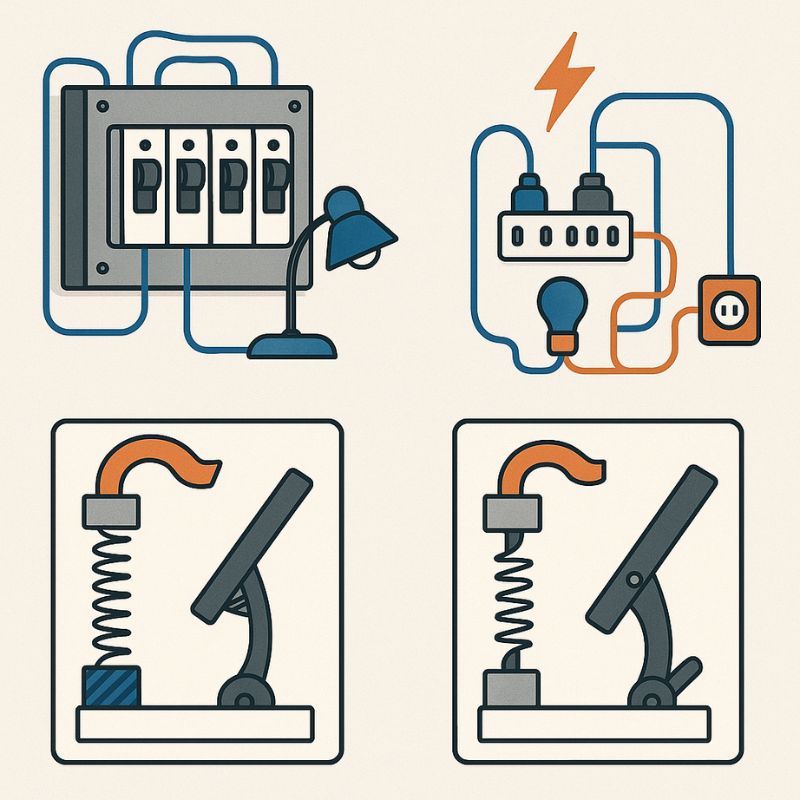
A circuit breaker is essentially a safety switch that automatically cuts off the electrical current when something goes wrong. Every building’s electrical panel (or “breaker box”) contains multiple breakers, each guarding a specific circuit (area or set of outlets/lights). Under normal conditions, electricity flows through the circuit continuously. But if the current flowing through a breaker exceeds a safe limit, the breaker “trips” (shuts off) to stop the flow and prevent damage. This typically happens in one of two scenarios: either you have an overload (too many devices drawing power) or a short circuit/fault (an electrical malfunction). We’ll cover those causes next.
Inside a circuit breaker, the shut-off mechanism is ingeniously simple. Most breakers contain a spring-loaded switch held in place by either a tiny electromagnet or a bimetallic strip. When an overload or surge of current occurs, the excess current either energizes the magnet or heats the bimetal strip, which then releases the spring and flips the switch to “off”. In plain English: too much current = breaker springs into action (literally) and cuts power. This all happens in a split second, protecting your wiring, appliances, and even preventing fires by halting the electricity before things overheat.
Once a breaker has tripped, it stays off until you manually reset it. This is a major improvement over old-fashioned fuses, which would burn out (“blow”) and have to be replaced entirely. (If your property still has a fuse box, that’s a sign it’s really time for an electrical upgrade, fuse boxes are outdated and not equipped to handle modern electrical loads.) With modern circuit breakers, you can simply flip the switch back on after addressing the cause of the trip. In the next sections, we’ll talk about why breakers trip in the first place and how to safely reset them.
Why Do Circuit Breakers Trip?
Circuit breakers trip as a protective measure whenever they detect unsafe electrical conditions. The most common reasons are overloaded circuits, short circuits, or ground faults (a specific type of short circuit). In each case, the breaker is essentially saying, “Something’s wrong so I’m cutting the power now to keep you safe.” Let’s break down these scenarios:
Overloaded Circuits
An overload happens when you have too many devices or appliances drawing power on the same circuit at once. Every circuit in your home or business has a maximum amperage (current) it can handle, and that corresponds to the breaker’s rating (often 15 or 20 amps for standard household circuits). If you exceed that by, say, running a high-wattage space heater, a hair dryer, and a vacuum on the same outlet or circuit, the breaker senses the excess current. For example, imagine you’re in the kitchen in a small Columbia café: you have a toaster oven, microwave, and coffee maker all plugged into one outlet splitter. Turn them all on, and suddenly the power goes out in that corner of the shop. You’ve overloaded the circuit, and the breaker tripped to prevent the wires from overheating. Overloads are the most common cause of breaker trips, and fortunately they’re often simple to solve (by redistributing devices or upgrading the circuit, as we’ll discuss later).
Short Circuits and Ground Faults
A short circuit occurs when electricity strays from its intended path and takes a “shortcut,” usually because of a wiring issue. In a normal circuit, electricity flows through hot (live) wires to your lights and outlets, and returns through neutral wires, completing a loop. If a hot wire accidentally touches a neutral wire (or another conductive path), it creates a nearly resistance-free route for the current, that’s a short circuit. When this happens, a massive surge of current flows instantaneously, because electricity always seeks the path of least resistance. The breaker responds by tripping immediately, as such high current can cause wires to spark or even catch fire. Short circuits can be caused by damaged insulation on wires, loose connections, or faulty appliances. For instance, if a rodent chews through wire insulation in your attic or a wiring nail punctures a cable behind the wall, two wires might touch and create a short.
A ground fault is a specific type of short circuit where the hot wire contacts a ground wire or grounded metal, essentially sending current straight into the earth (or into any grounded metal appliance chassis). Ground faults often happen in wet or damp conditions, say, an outdoor outlet gets water in it, or an appliance has a leak. The danger with ground faults is electrical shock: if an appliance’s metal case becomes energized, anyone touching it could get a serious shock. Breakers will trip on ground faults if the surge is large, though special devices called Ground Fault Circuit Interrupters (GFCIs) are even quicker at detecting small leakage currents to ground and cutting power. (In fact, GFCI outlets are required in kitchens, bathrooms, and outdoor circuits to protect against shocks.) The bottom line is that whether it’s a short or a ground fault, the circuit breaker’s job is to shut down the circuit immediately to avoid shock and fire hazards.
In summary, if a breaker trips, it’s doing its job: preventing an unsafe situation. Your task is to figure out which of these causes is to blame, an overload (too many devices), a short (wiring or device failure), or a ground fault (often related to moisture or a wiring error), and then take appropriate action. Next, we’ll go through how to troubleshoot and safely reset a tripped breaker.
Troubleshooting a Tripped Circuit Breaker
Discovering a tripped breaker can be a little alarming, but in many cases you can fix it yourself safely by following a few simple steps. Always remember: safety first. If you ever see burn marks, smell burning plastic, or hear buzzing, or if the breaker trips again immediately after resetting, you should stop and call a professional electrician. Otherwise, here’s how to troubleshoot and reset a typical tripped breaker:
- Unplug devices and turn off switches on the affected circuit. When the power suddenly cuts out in a certain area, first switch off and unplug the lights or appliances that were in use there. This way, when you reset the breaker, there won’t immediately be a heavy load or faulty device still causing a problem. For example, if the breaker for your living room tripped while you had the TV, stereo, and space heater on, turn all those devices off or unplug them.
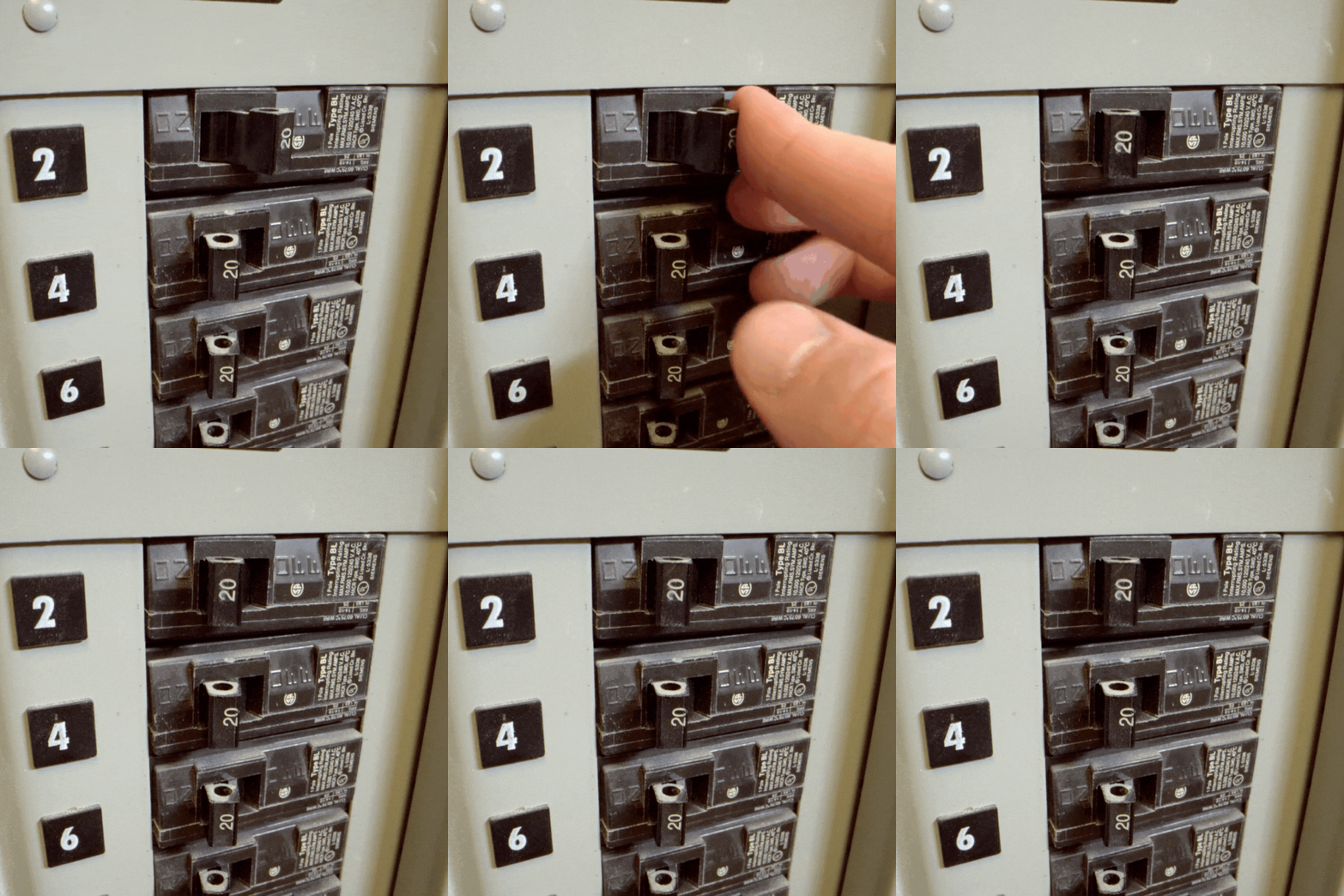
- Locate your electrical panel and the tripped breaker. Electrical panels (breaker boxes) in Columbia homes are often in a garage, utility room, or outside service area. Open the panel door and look for the breaker that has moved to the middle or “off” position. Tripped breakers don’t always flip fully to the off side; many breakers will appear slightly misaligned compared to the others (some newer breakers even show a little red/orange indicator flag). If labels are marked (e.g., “Kitchen” or “AC Unit”), they can help identify the right one.
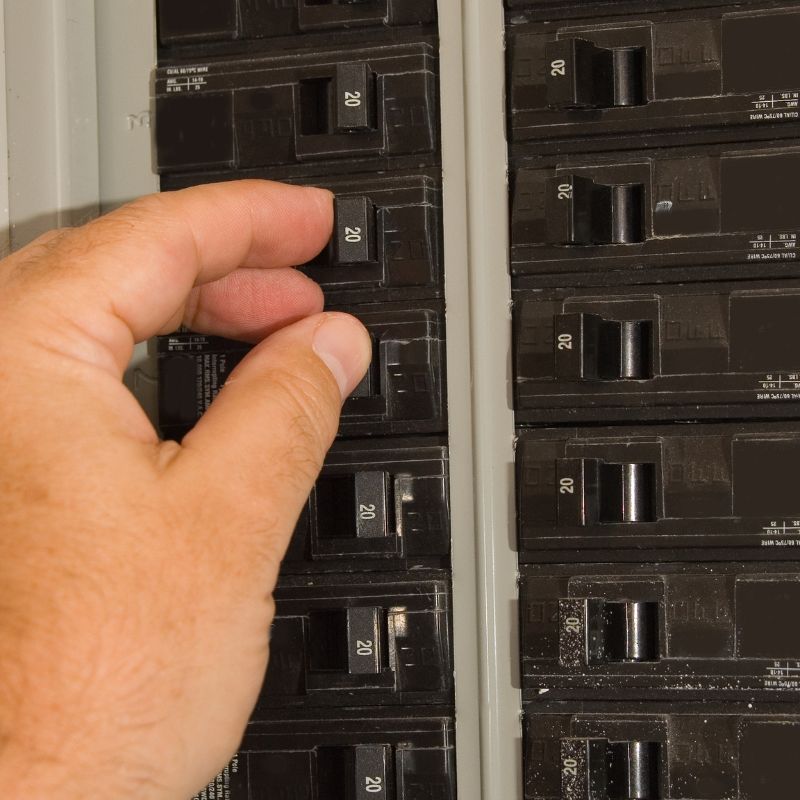
- Reset the breaker properly. To reset, first push the breaker all the way to the OFF position to ensure it’s fully “reset,” then switch it back to ON. You might feel a bit of resistance, and then a “click.” Stand to the side of the panel and, if possible, use one hand only (not touching the panel with your other hand or leaning on something grounded) as you flip the switch back. This stance is a precaution electricians use, if there’s a spark or flash, you minimize the risk of injury. In most cases, though, the power will come back on immediately and stay on.
- Test the circuit and monitor. Go back and turn your devices or appliances on one at a time. Don’t just flick everything on all at once. Gradually restore power to the lamps, TV, microwave, or whatever was on that circuit, and wait a few minutes between each. This staggered approach ensures you’re not slamming the circuit with all the load at once, and it helps you identify if a particular appliance is the culprit. For example, if you reset the breaker and everything stays on until you power up that space heater again, and boom, the breaker trips, then you know the heater (or that circuit’s load) was likely the issue.
- Address the root cause. Once you’ve restored power, think about why the breaker tripped. If it was an overload, consider moving some devices to a different circuit or not using so many high-wattage appliances simultaneously in one area. If it was a short circuit (and you’re not sure where), or the breaker trips off again immediately even with everything unplugged, then do not keep retrying, this indicates a persistent fault. In that case, call a licensed electrician to investigate. They may find a frayed wire or a bad outlet causing the short, or the breaker itself could be faulty.
Most of the time, a tripped breaker is a momentary inconvenience, not a major crisis. The breaker’s doing its job, and after you reset it and adjust your appliance usage, you’re back in business. However, if you find yourself running to the breaker box frequently, or a particular breaker won’t reset and stay on, that brings us to the next topic, when a breaker or your electrical panel might need repair or replacement.
When Should You Repair or Replace a Circuit Breaker?
Circuit breakers are durable devices, but they don’t last forever and they’re not foolproof. Just like any mechanical part, they can wear out or fail. Moreover, your home’s electrical needs may change over time, outgrowing what the panel and breakers can safely handle. Here are some signs that a breaker (or the whole electrical panel) may need repair or replacement:
Breaker trips constantly:
If the same breaker is tripping over and over, even after you’ve redistributed loads, it may be failing internally or is undersized for the circuit’s needs. Frequent tripping can be a sign the breaker itself is wearing out, or that there’s an underlying wiring problem. In either case, have it checked. A breaker that immediately trips again every time you reset it is waving a red flag that something is wrong.

Burning smells or scorch marks:
If you notice a burnt-plastic smell near the panel, or see blackened/brown scorch marks around a breaker or outlet, that indicates overheating or arcing. This is dangerous, it could mean a short circuit or a loose connection that’s causing heat buildup. The affected breaker and possibly the wiring connected to it should be inspected right away. Do not ignore burning smells; that’s a common warning sign before an electrical fire.
Warm or hot breakers to the touch:
It’s normal for breakers to feel slightly warm when under load, but they should never be hot. If a breaker is hot even when nothing much is on, or you hear it buzzing or humming, it could be failing. Heat can also result from a loose wire connection on the breaker or bus bar. Either way, an electrician should address it, they might tighten connections or replace the breaker if it’s defective.
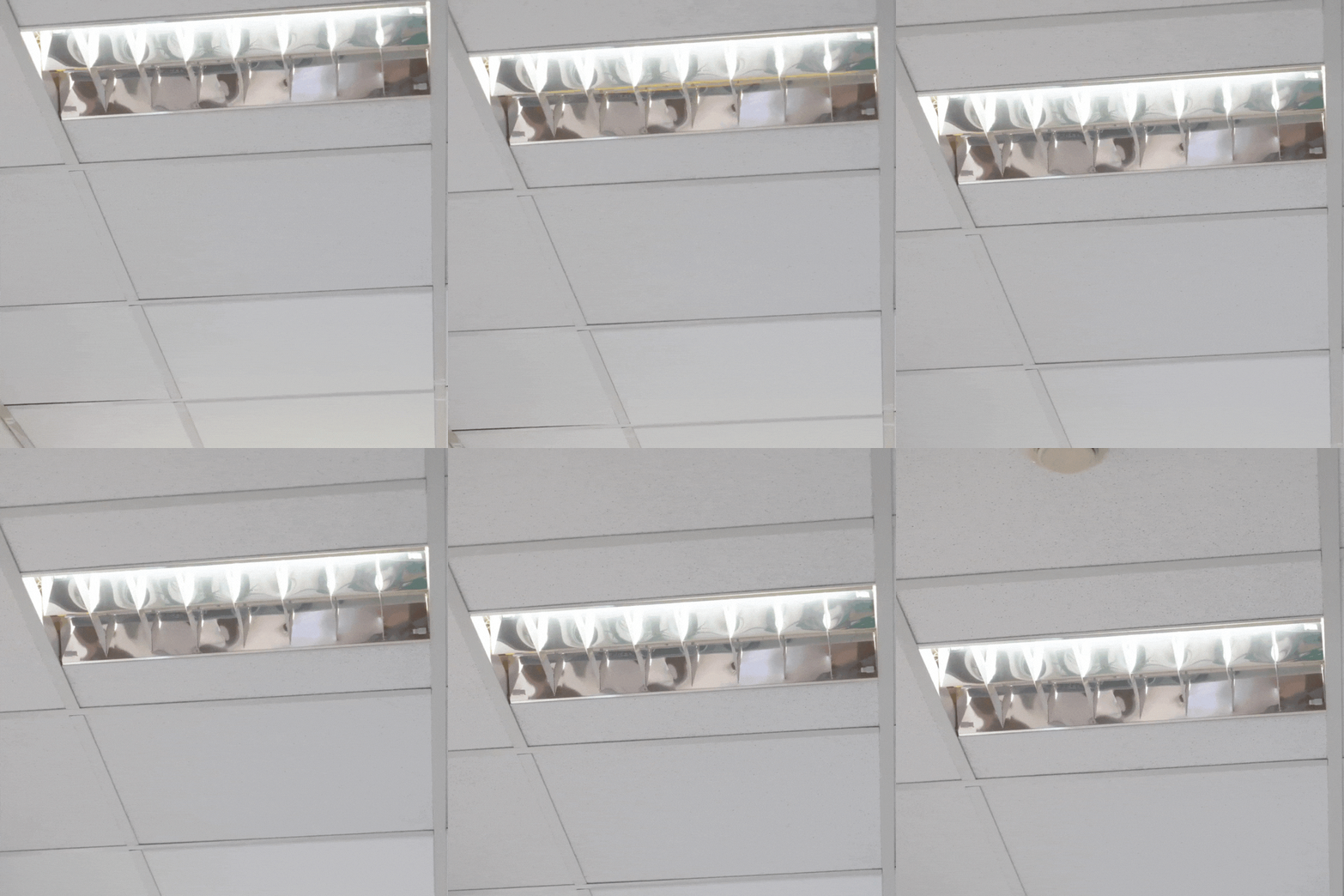
Flickering or dimming lights:
Do your lights flicker when the fridge or AC turns on? Or do certain rooms’ lights dim randomly? While occasional minor dimming can happen if a big appliance starts (like your central air), consistent flicker or dimming could indicate the circuit or panel is overloaded or has a bad connection. It might be time to upgrade that circuit or the whole panel if it can’t maintain stable voltage.
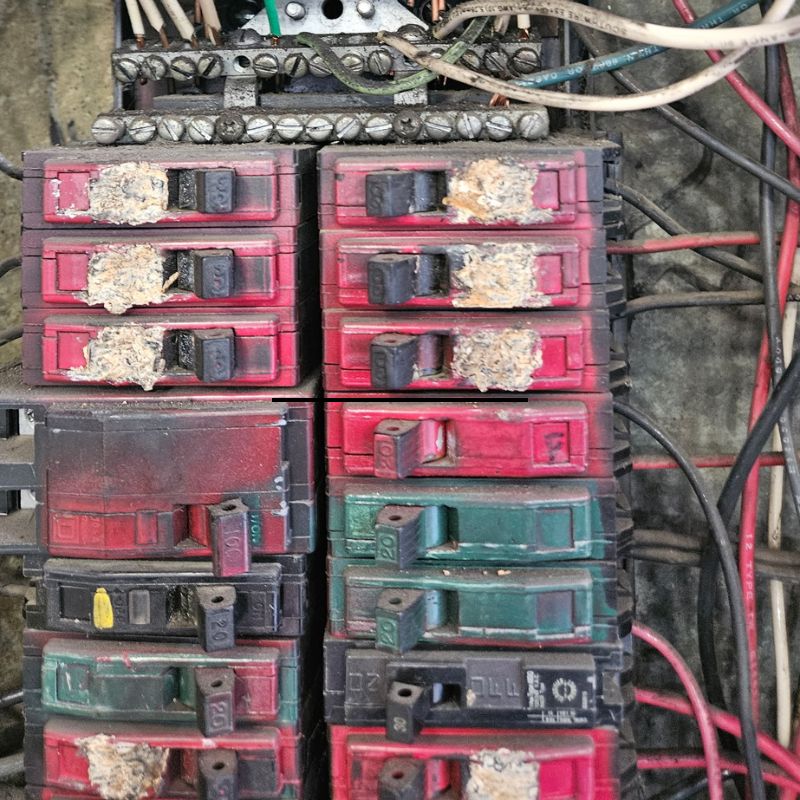
Old, outdated electrical panel:
If your home or building is 25-40 years old and has the original panel, it may be past its prime. Electrical panels and breakers age out, components weaken, and older panels weren’t designed for today’s power demands. For example, a panel from 1975 might only be 100-amp service with a handful of circuits; modern homes often need 200-amp service or more. Old panels can also develop corrosion or simply not trip reliably as they should. Experts estimate a typical panel’s lifespan is around 25-30 years, beyond that, an upgrade is strongly recommended for safety.
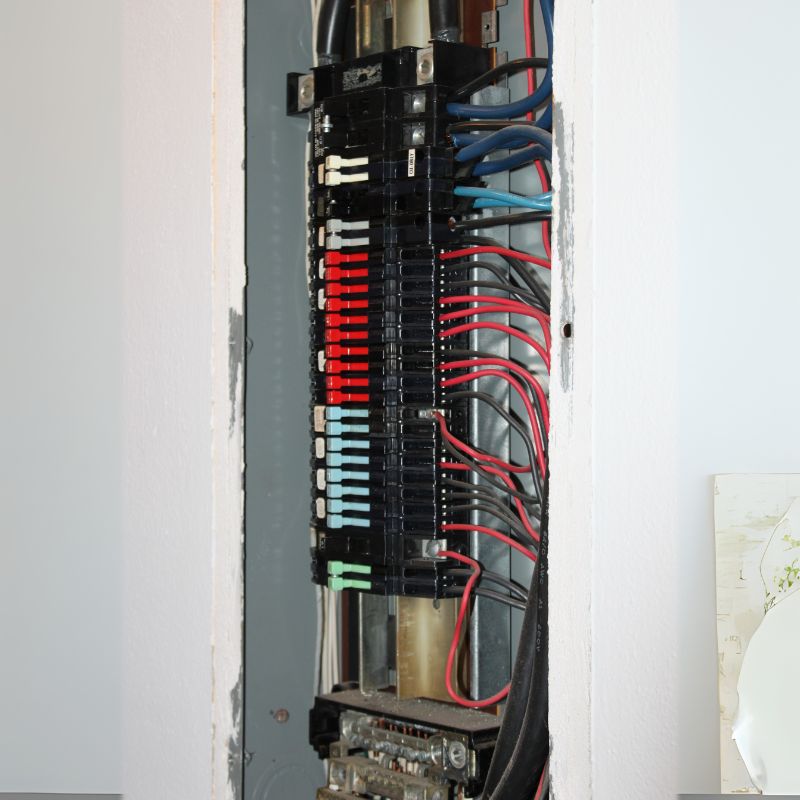
Fuse box or obsolete breakers:
As mentioned, if you still have an old fuse box instead of circuit breakers, that’s a definite candidate for replacement. Also, some older breaker panels are notorious for safety problems, for instance, Federal Pacific Electric (FPE) Stab-Lok panels, or certain Zinsco, Pushmatic, or Challenger brand panels. These were common decades ago, but many have been recalled or are known fire hazards (FPE panels, in particular, failed to trip properly in lab testing). If your main panel is one of these older types, you should have it evaluated and likely replaced as soon as possible for peace of mind.
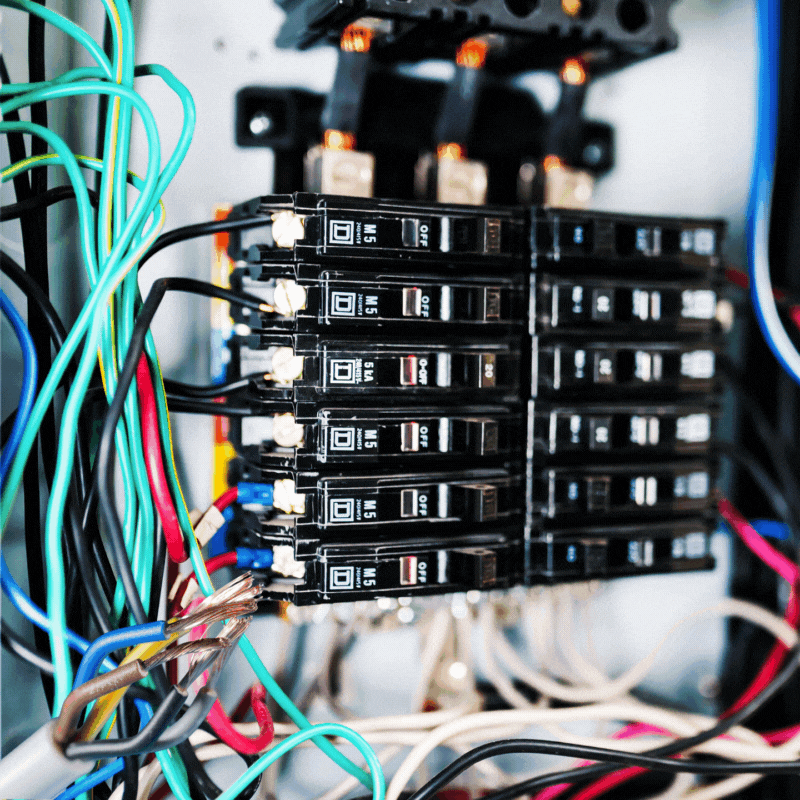
Visible damage or wear:
Any sign of water damage, rust, or physical damage in the breaker box is cause for concern. Water and electricity don’t mix, if a panel got wet (from a roof leak or flood), the breakers might corrode or malfunction. Likewise, if someone in the past replaced a breaker with one of the wrong type or there are signs of melted plastic, those issues need correcting.

Not enough power or circuits:
Your electrical needs have increased but your panel is maxed out. Maybe you added a home office with a bunch of computer equipment, or you’re installing an EV charger or new HVAC system. If there’s no room in the panel for new circuits, or your breakers trip whenever you run high-draw appliances, the system is telling you it’s overcapacity. Small business owners might face this too, for example, a bakery with new ovens or a machine shop with additional equipment may quickly overwhelm an old 100-amp panel. This is a sure sign that you should consider a panel upgrade (and we’ll talk about that next).
If you notice any of these warning signs, don’t ignore them. Electrical issues rarely fix themselves, and a struggling breaker or panel can pose serious safety risks. Often, the fix might be as simple as replacing a single bad breaker, but in other cases an upgrade to your whole panel may be the smartest solution. So how do you decide? That brings us to panel upgrades and when to call a professional.
The Benefits of Upgrading Your Electrical Panel
Upgrading an electrical panel (sometimes called a “heavy up” when increasing amperage) is a bigger project, but it can vastly improve the safety and capacity of your electrical system. In Columbia’s older neighborhoods, we frequently find panels that are decades old and not up to modern needs. Here are a few reasons a panel upgrade is worth considering:
Safety First:
New panels come with the latest safety technology. For instance, modern circuit breakers can include arc-fault breakers (AFCIs) that detect dangerous arcing conditions that standard breakers might miss, and ground-fault protection (GFCIs) built into breakers for wet-area circuits. Upgrading can also eliminate the aforementioned problematic old panels that might fail to trip in an emergency. Simply put, a new panel greatly reduces the risk of electrical fires or shocks in your home or business.
More Power & Circuits:
An upgrade can increase your home’s electrical service capacity (from say, 100 amps to 200 amps or more) and provide more breaker slots. This means you can run more devices without stressing the system. If you plan to add big electrical loads, for example, installing a central HVAC in an older home, a workshop with power tools, or charging an electric car, you’ll likely need a panel that can handle it. Upgrading ensures you have plenty of circuits to distribute heavy appliances on separate breakers, avoiding constant overload trips. It also means room for future expansion (new outlets, equipment, or even an addition to the building).
Fewer Nuisance Trips:
With a larger, well-designed panel, circuits can be dedicated to high-use areas or appliances. You won’t have the toaster and the microwave and the fridge all crammed on one 15-amp circuit. The result is fewer overload trips and a more reliable power supply day-to-day. In a small business, this translates to less downtime due to electrical issues. In a home, it means you can microwave your lunch and blow-dry your hair at the same time without flipping a breaker!
Energy Efficiency and Savings:
This one is a bit indirect, but a new panel with secure, clean connections and the capacity for proper circuit distribution can reduce energy waste. Old corroded connections can create resistance (and heat). Plus, a new panel can better accommodate energy-efficient upgrades like solar panels or smart home systems down the line. While the panel itself doesn’t lower your electric bill, it enables a safer integration of efficiency improvements and may even satisfy insurance requirements (some insurers charge higher premiums on homes with very old electrical panels due to fire risk).
Home Value and Peace of Mind:
Upgrading your electrical panel can boost your property value, as it’s a significant safety and infrastructure improvement. Prospective buyers (and their home inspectors) in Columbia, SC will be pleased to see a modern 200-amp panel with no loose wires or old-school fuses. It signals that the home’s electrical system is up-to-date and less likely to have hidden problems. Even if you’re not selling soon, your peace of mind is priceless and you’ll know that your home or business’s electrical heart is robust and safe.
To sum up, a panel upgrade is recommended when your current panel is old, unsafe, or just inadequate for your needs. For many folks, the tipping point comes when installing something like a new EV charger, hot tub, or major appliance, if the existing panel can’t support it, upgrading is the way to go (often alongside a service capacity increase from the utility). Always have a licensed electrician assess your specific situation; they can determine the right panel size and features for your needs and handle the upgrade safely, usually in a day’s work.

Regular Inspections and Maintenance Matter
One final but vital point: don’t wait for trouble to strike before thinking about your electrical system. Just as you service your HVAC or get an annual health check-up, your electrical panel and breakers benefit from periodic inspections. Industry experts recommend having your home’s electrical system inspected every 3-5 years under normal conditions. In Columbia’s warm, humid climate, or if you have an older property (25+ years), sticking to the shorter end of that range is wise. Regular inspections will spot issues like loose connections, corrosion, or aging breakers before they turn into outages or safety hazards.
During an inspection, an electrician will check the panel, test breakers, look for hot spots or burned wires, and ensure all circuits are properly sized and grounded. They can also test safety devices like GFCI and AFCI protectors. For businesses, these inspections are equally important, in fact, insurance policies and local codes may require routine electrical checks, especially for commercial properties open to the public.
Maintenance can be as simple as the electrician tightening screws on breaker connections (they can loosen over time with heat expansion and contraction) and cleaning out any debris. Think of it as a tune-up for your electrical panel. A well-maintained breaker is far more likely to trip when it needs to, and not trip when it shouldn’t. Considering that tens of thousands of electrical fires occur each year due to malfunctions, this proactive approach is a smart investment in safety.
Stay Safe with Professional Help in Columbia, SC
Circuit breakers are your home’s silent guardians, working in the background to keep you safe from electrical mishaps. By now, you should have a solid grasp on how they operate, what to do when one trips, and how to recognize when something’s not right. Remember that while troubleshooting a single tripped breaker is usually DIY-friendly, anything beyond that, repeated trips, signs of damage, panel upgrades, should involve a licensed electrician for home electrical repair. Electrical issues can escalate quickly, and it’s always better to be safe than sorry.
Whether you’re a homeowner or a small business owner in Columbia, SC, don’t hesitate to get professional help for your electrical needs. If your breakers are acting up, or your panel is old and straining under the load of modern life, call a trusted electrician to assess it. They can perform inspections, make repairs, and guide you on upgrades to keep your property safe and up to code. We offer 24/7 emergency service, so if a breaker or panel failure leaves you in the dark on a sweltering summer night, you have support.
In summary: Circuit breakers are crucial to electrical safety, give them the respect and care they deserve. Test your safety devices periodically, don’t ignore warning signs like frequent trips or odd smells, and invest in upgrades or repairs when needed. Your reward will be a safer, more reliable electrical system and the peace of mind that comes with it. Stay safe, Columbia!
