Do Homeowners and Small Business Owners in Columbia, SC Benefit from EV Chargers and What Does It Mean for Property Value?
Electric vehicle adoption is growing rapidly in South Carolina, with registrations jumping from about 2,790 in 2017 to over 20,200 in 2022, especially in Columbia’s Midlands region. As more EVs hit the road, chargers are becoming valuable for both homeowners and businesses.
For homeowners, a Level 2 charger offers fast overnight charging, daily convenience, and can increase resale value, while businesses can attract eco-conscious customers, boost property value, and encourage longer visits by offering charging stations. With federal tax credits, local rebates, and expert installation from companies like Rytec Electric, adding an EV charger is an affordable, future-proof investment that delivers convenience, property value, and long-term benefits.
EV Charging 101 – What You’re Really Installing
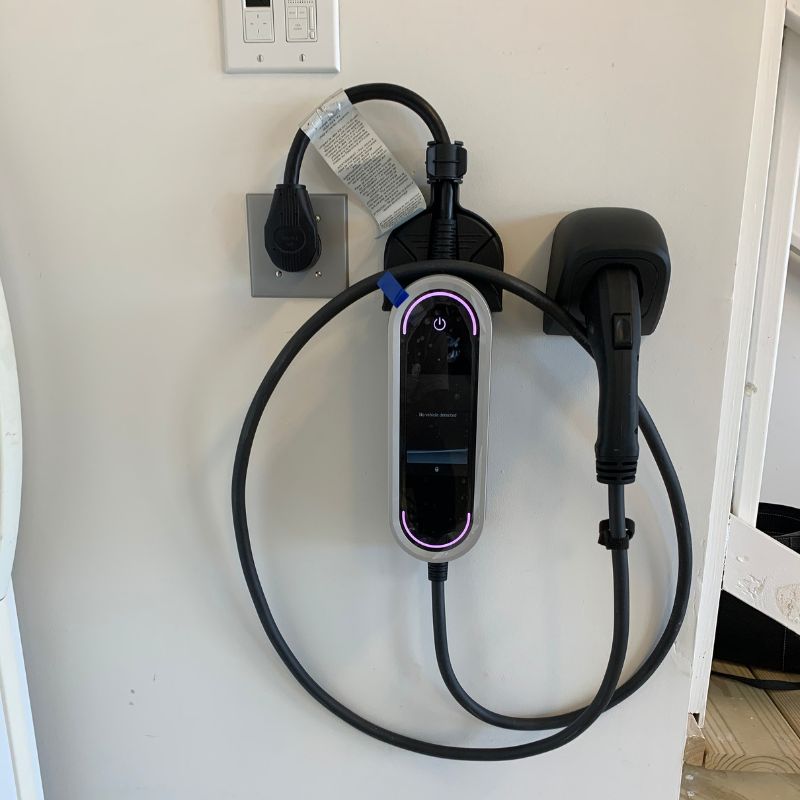
Understanding the basics: When we talk about installing an “EV charger,” we usually mean a Level 2 charging station. This is the 240-volt unit that delivers faster charging to your electric car. By contrast, Level 1 charging uses a standard 120-volt household outlet, the kind you plug a phone or toaster into. Level 1 is extremely slow for EVs (adding only ~4-5 miles of range per hour), often taking 40-50 hours for a full charge on a long-range battery. It’s fine for emergency use or plugging in a Prius hybrid, but not ideal for daily driving needs.
Level 2 chargers are the go-to choice for home and business installations. A Level 2 charger uses a 240V circuit (like what your electric dryer or oven uses) to deliver much more current to the vehicle. This typically charges an EV in 4 to 10 hours instead of days. In practical terms, that means you can plug in at dinner and have a full battery by morning. Level 2 units can add roughly 20-30 miles of range per hour (varies by charger amperage and vehicle), which covers the average commute with ease.
For context, Level 3 or DC fast chargers (the kind you see along interstates for road trips) can charge a car in under an hour, but those require industrial power levels (480V three-phase) and are far more expensive, not something homeowners or typical small businesses would install.
What are you actually installing? Physically, a home or commercial Level 2 charger (often called EVSE, Electric Vehicle Supply Equipment) is a unit that either mounts to the wall or stands on a pedestal. It has a cable with a connector that plugs into your car. When you hire an electrician to install an EV charger, they will run a dedicated 240V circuit from your electrical panel to the charger’s location. This includes installing the correct breaker, wiring, and outlet or hardwired connection for the charging unit. Essentially, you’re adding a high-capacity appliance to your electrical system. Because of the power involved, it’s critical to have a proper installation with the right wire gauge, circuit protection, and permits for safety. A good electrician will also help you choose a charger model that fits your needs (for example, a “smart” networked charger with Wi-Fi vs. a basic model) and ensure your electrical panel can handle the additional load (upgrading the panel if necessary). In short, you’re installing a piece of infrastructure that enables convenient, high-speed charging for any EV at the property.
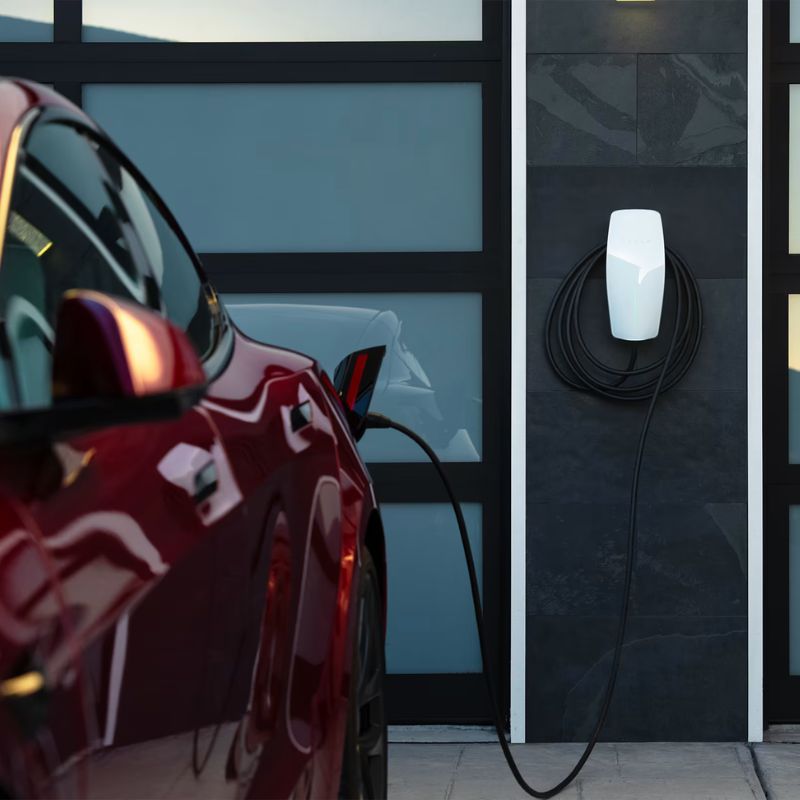
Image credit: Tesla, Inc. — Tesla Home Charging
The Local Landscape: EV Adoption in South Carolina
South Carolina might not be California when it comes to EVs, but the adoption here is picking up speed. In 2017 there were fewer than 3,000 electric vehicles registered statewide; by 2022 that number shot up to 20,239 EVs on the road. That’s a more than sevenfold increase in five years, and the curve is pointing upward. The Columbia area (often called the Midlands) is one of the hotspots for this growth. EV registrations have been clustering in the state’s more metropolitan areas, places like Columbia, Charleston, Greenville, where drivers are early adopters of new tech. If you’ve noticed more Teslas, Ford F-150 Lightnings, or Chevy EVs around town, you’re not imagining it. From new electric SUVs in suburban driveways to companies starting to add EVs to their fleets, the electric transition is underway in South Carolina.
Along with more EVs comes the need for more charging infrastructure. Public charging stations are gradually appearing in our region at shopping centers, highway exits, hotels, and municipal parking lots. Statewide, South Carolina now has over 500 public charging station locations and about 1,200 charging ports available to EV drivers. Many of these are concentrated along major travel corridors like I-95 and around city centers. Columbia, sitting at the intersection of I-77, I-20, and I-26, has become a logical charging hub. Still, when you compare the number of charging stations to the number of gas stations, we have a long way to go. The state government and utilities are aware of this and are taking action. South Carolina’s Department of Transportation secured about $70 million in federal funds to expand EV charging through the National Electric Vehicle Infrastructure (NEVI) program. Initiatives like Plug In SC (led by the SC Energy Office and Palmetto Clean Fuels Coalition) are also working to promote EV charger deployment and even standardize signage so drivers can easily spot chargers.
For Midlands homeowners and businesses, this local landscape means two things. First, the odds that you or your customers will drive an EV in the near future are rising rapidly. What was once a rarity (“my neighbor has a Tesla”) is becoming commonplace. Second, while public charging is growing, it may not always be conveniently located when you need it. In Columbia, you might have a few public chargers around Harbison shopping areas, downtown, or in Five Points, but outside the city center, charging stations can be sparse. This makes home charging and private on-site charging at businesses extremely valuable. Owning an EV in South Carolina often still means “fill up at home” because you can’t yet count on a charger on every corner. In the next sections, we’ll look at whether installing your own charger is necessary or just nice to have and how it can impact the value of your property.

Do Homeowners Really “Need” a Dedicated Charger?
If you’re a Midlands homeowner who’s just bought an EV (or is considering one), you might be wondering: Do I really need to install a charger, or can I get by without it? Technically, you could drive an electric car without a Level 2 home charger, every EV comes with a basic Level 1 charger cord that plugs into a normal outlet. But relying on that is kind of like filling a swimming pool with a garden hose. It works, but it’s slow and inconvenient for daily life. Most EV owners quickly realize that a dedicated Level 2 home charger isn’t just a luxury; it’s almost a necessity for comfortable EV ownership. In fact, about 80% of EV charging happens at home, according to industry data, because it’s simply the easiest and cheapest way to keep your car powered up.
With a Level 2 charger at home, you can add roughly 20-30 miles of range per hour of charging, which means overnight charging covers you for the next day’s drives. Compare that to a Level 1 trickle charge, which might only give you 4 miles of range per hour, that’s maybe 40-50 miles added in an entire night. If you have a commute to Fort Jackson or need to run errands around Columbia, that trickle might not cut it. A dedicated charger ensures that every morning you start with a “full tank” (or rather, a full battery). It eliminates the hassle of having to find a public charger every few days or the fear that you’ll wake up to a half-charged car because you only gained 20 miles overnight on Level 1.
There’s also a cost angle: Charging at home is typically the most affordable way to fuel an EV. South Carolina’s electric rates are reasonably low (and some utilities like Duke Energy and Dominion Energy offer special time-of-use plans for EV owners), so you can charge your car during off-peak hours for much less than the cost of gasoline per mile. Using public fast chargers, on the other hand, can be pricier, and you might find yourself paying 3-4 times the cost per kilowatt-hour compared to your home rate. So installing a home charger means you’re taking full advantage of the low “fuel” cost of driving electric.
In short, while you could skip installing a Level 2 charger, almost every EV homeowner finds that it drastically improves the ownership experience. It’s a bit like having Wi-Fi in your house, you can technically use your phone’s data for internet, but having that home Wi-Fi setup makes everything smoother, faster, and more reliable. Likewise, a home EV charger gives you freedom from public charging dependence. It’s peace of mind knowing your car is charged when you need it, and it integrates seamlessly into your routine (plug in at dinner, unplug in the morning). Given the relatively modest cost of installing a charger (especially with incentives available), most homeowners view it as a must-have upgrade once they commit to an electric vehicle.
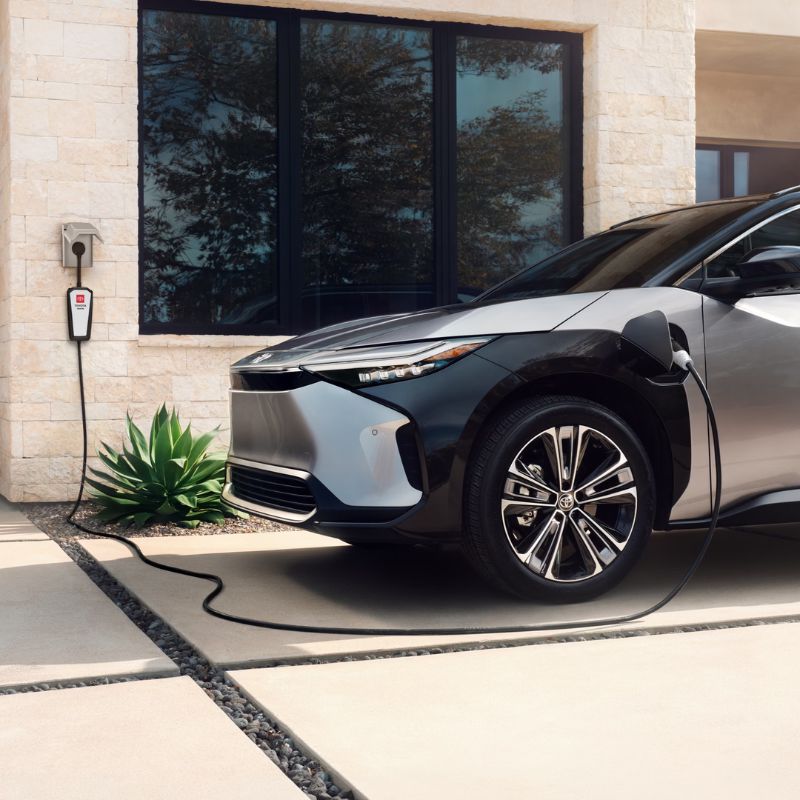
Image credit: Image credit: Toyota Motor Corporation — Toyota bZ4X
Why Small Businesses Should Consider On-Site Charging
If you run a small business in the Columbia area, whether it’s a retail shop, restaurant, office, or even a bed-and-breakfast, you might ask: Should I bother installing an EV charger on my property? Here are some compelling reasons to consider it:
Attract and retain customers: Offering EV charging can draw electric vehicle drivers to your business. Imagine a shopper choosing between two stores, if one lets them top up their car while they shop, that could be the deciding factor. EV owners will often plan their stops around where they can charge. Providing a charger (even a couple of parking spots with Level 2 chargers) can bring in new customers and encourage existing ones to stay longer. For example, a customer might spend an extra half hour browsing your store or ordering dessert at your café while their car charges. Longer dwell time can translate into higher sales per visit. Plus, you might get listed on EV charging apps, essentially putting your business on the map for EV drivers. It’s a modern amenity that can set you apart from competitors down the street.

Employee satisfaction and loyalty: If you have employees, especially at an office or a workplace with regular staff, providing on-site charging is a forward-thinking perk. As more workers drive EVs, having a place to charge during the day becomes a valued benefit. It shows you care about your team’s needs (and their wallets, since they save on fuel by charging at work). Even employees who don’t yet drive an EV will see the installation as a signal that you’re a progressive, accommodating employer. This can boost morale and loyalty. In the long run, more employees will be driving electric, you’ll be ahead of the curve by planning for it now.
Boost your green image: Installing EV chargers visibly demonstrates your commitment to sustainability and innovation. Customers notice these things. A charging station out front with your business’s name on it tells the community that you’re embracing clean technology and reducing carbon footprint. This can enhance your brand reputation, especially among environmentally conscious consumers (and let’s be honest, that group is growing). It’s a marketing point: you can share on social media that you’ve added EV charging, maybe even encourage EV clubs to visit. In a place like Columbia, where people take pride in community initiatives, being an early adopter of EV infrastructure can garner positive attention.

Increase property value & tenant appeal: If you own the commercial property, an EV charger is an investment in the value of your real estate. Just as with homes, commercial properties with modern amenities are worth more. Research by the Urban Land Institute indicates adding EV charging infrastructure can increase property values by up to 15% (particularly for commercial and multifamily properties). Even if that number sounds high for a small business, there’s no doubt that a building equipped with EV charging is more attractive to potential buyers or renters. For instance, if you ever lease space to another tenant or sell your property, having charging stations already installed can be a significant selling point. It’s a bit like having solar panels or high-speed internet wiring, it shows the property is future-ready. In fact, a recent report noted that about 70% of prime office buildings in the U.S. now have EV chargers in place. While your business might not be a “prime office tower,” the trend is clear: commercial real estate is moving toward EV-friendly facilities. Installing a charger now could put your property ahead of the curve in the Midlands market.
Potential revenue (or cost savings): Depending on your business model, you might even generate a little revenue from your charging station. Many small businesses offer free charging as a courtesy (knowing it attracts customers who then spend money on other services). But you could set up a unit that charges a fee for usage, for example, EV drivers pay a modest amount per kWh or per hour to charge. You likely won’t get rich from charging fees, but it can offset the electricity cost and maintenance of the unit. Alternatively, some businesses get sponsorships or partnerships (imagine a charger branded with a local company’s logo, helping to pay for it). If your charger becomes popular, it could also open the door to other opportunities, like cooperating with electric fleets or delivery vehicles that need a charging base. And don’t forget, businesses can take advantage of hefty federal tax credits for installing EV chargers (30% of the cost, up to $100,000 credit), which dramatically improves the financial equation.

In summary, while an on-site EV charger might not yet be as standard as having Wi-Fi or air conditioning at your business, it’s quickly moving from “nice perk” to “expected amenity” in the coming years. Columbia-area businesses that install chargers now are not only gaining immediate benefits (customer attraction, property value bump), but also positioning themselves as local leaders in the EV movement. It’s an investment that signals you’re thinking ahead, which customers and partners will appreciate.
Impact on Property Value – The Numbers
Let’s dig into how installing an EV charger can affect your property value because this is often where skepticism arises. After all, a charging station is not a kitchen remodel or a new roof, so how much value could it really add? It turns out, there’s growing evidence that EV charging capability boosts property values in both residential and commercial markets.
For homeowners, the effect may not be an overnight huge jump, but it’s meaningful. A recent study published in Nature Sustainability looked at home values in areas with public EV charging and found a clear positive impact. Single-family homes located within about half a mile (0.6 km) of a public EV charging station saw a 3.3% increase in sale price on average (roughly $17,000 added value) compared to similar homes without nearby chargers. Homes even closer, within a quarter-mile or so of a charger, saw up to a 5.8% increase in value. Now, that study was about proximity to public charging infrastructure, not private home chargers, but it underscores a key point: EV charging capability is becoming a desirable real estate feature. If being near a charger bumps value by a few percentage points, having one in your own garage can also make your home more attractive to buyers. Think of an EV charger like an upgrade amenity, similar to a smart thermostat, a security system, or a solar panel setup. It’s especially appealing if a prospective buyer already drives an EV or plans to. Even buyers without an EV may see it as a forward-looking feature, one that could save them hassle (and expense) in the future if they decide to go electric. As EV adoption grows, not having a charger could even become a drawback; a future buyer might knock a few thousand off their offer if they know they’ll have to install a charger themselves. On the flip side, having a charger ready to go can make your home stand out and potentially sell faster. In competitive real estate markets, little things like an installed EV charging station can be the cherry on top that sways a deal.
For commercial and investment properties, the stakes and rewards can be higher. We mentioned earlier that research by the Urban Land Institute found EV charging can raise property values by up to 15%. That figure likely applies to large-scale developments or multi-tenant properties where charging stations elevate the class of the property. For a small business or rental property owner, the bump might not be as dramatic, but it’s still significant. Consider a small strip mall or an office building in Columbia: if you install a couple of charging stations, you’re now able to attract tenants who have company EVs or who want to offer employee charging. That widens your potential tenant pool and could justify higher rents. Commercial real estate appraisers are starting to take note of EV infrastructure as well; it contributes to what they call functional obsolescence if a property lacks features that modern properties have. In a few years, properties without any EV charging may be viewed as outdated (like a building without high-speed internet). So by installing chargers now, you protect your property value from that kind of depreciation relative to the market.
Let’s put it in dollar terms. Suppose you spend $2,000 – $3,000 to install a home charging station (that’s a ballpark figure we’ll break down later). Even a modest 3% increase in home value on a $300,000 house is $9,000, that’s triple your money back. And some scenarios could see more. On the commercial side, if a building is worth $1 million and chargers make it say 5% more valuable (through higher income potential or desirability), that’s $50,000 gained. These are simplified estimates, of course; the actual impact can vary by location and the buyer’s mindset. But one thing’s for sure: EV infrastructure isn’t hurting property values, it’s helping them. Real estate professionals have started including “EV charger ready” or “Tesla charger installed” in home listings as a selling point. It’s akin to having an upgraded appliance or premium HVAC system.
To temper expectations, it’s not that installing a charger will let you jack up your home’s asking price by tens of thousands overnight. Instead, think of it as preserving and slightly enhancing value. You’re future-proofing your property (more on that soon), which means you won’t be caught flat-footed when the majority of buyers in the market demand EV-ready homes. In summary, the numbers and trends indicate that an EV charger is a value-add: a relatively small investment that can yield a solid return in property value, all while making the property more functional and attractive in today’s evolving market.

Incentives & ROI in South Carolina
One of the best parts about installing an EV charger in 2025 is that you don’t have to shoulder the full cost alone. There are incentives available in South Carolina that significantly improve the return on investment (ROI) for both homeowners and businesses. Let’s look at what’s out there:
Federal tax credits: The U.S. federal government wants to encourage EV infrastructure, so it offers a generous tax credit under the Alternative Fuel Vehicle Refueling Property Credit. As a homeowner, you can claim 30% of your EV charger installation costs (hardware and labor) as a tax credit, up to a maximum of $1,000. This is literally money off your tax bill, effectively a partial refund for installing a charger. If your install costs $1,500, for example, you could get $450 back at tax time. For businesses, the credit is even bigger, 30% of costs up to $100,000 per property. Yes, five zeros! That’s aimed at encouraging commercial properties to install multiple charging stations, even expensive fast chargers. If you’re a small business putting in, say, two Level 2 chargers that cost $10k in total, you could get $3k back in credits, which is a nice chunk of change. (Always consult a tax professional for specifics, of course, but these credits are on the books through at least 2032 in the latest legislation.)
South Carolina state incentives: South Carolina currently doesn’t have a statewide tax credit for EV chargers like some states do, but various local utilities and co-ops have rebate programs. Depending on where you live or who your electricity provider is, you might qualify for a rebate after installing a qualifying charger. For example, Blue Ridge Electric Cooperative (serving parts of the Upstate) offers a $500 rebate to residential customers who install a Level 2 charger. Santee Cooper (a state-owned utility in eastern SC) has offered rebates up to $250 for home chargers. Duke Energy, which serves the Upstate and parts of the Midlands, has a program that provides a one-time credit up to $1,236 for home charger installation costs, that’s quite substantial. Smaller municipal utilities like Greer CPW and co-ops like York Electric also have $200-$250 rebates. While Columbia is primarily served by Dominion Energy (formerly SCE&G), Dominion’s South Carolina division hasn’t announced a broad charger rebate as of writing. However, Dominion does offer an EV “charger reward” program that gives an upfront $125 incentive for enrolling a new charger in their load management program (this program rewards you for allowing your charger to cycle off during peak grid times). Additionally, Dominion and other SC utilities provide time-of-use (TOU) rate plans that can save EV owners money by charging at night. In summary, it’s worth checking with your electric provider, you might be pleasantly surprised that there’s a rebate or special rate to take advantage of. These incentives can knock a few hundred dollars off your net cost.
ROI – making the case: When you combine credits and rebates with the value-add and savings, the ROI for an EV charger can be quite attractive. Consider a homeowner example: You spend $1,500 on an installed charger. You get $450 back from the federal credit, maybe another $250 from a utility rebate, your net cost is $800. Now you enjoy lower “fuel” costs every week because charging at home is cheaper than buying gas (potentially saving hundreds per year if you’re switching from a 25 MPG gasoline car). And when you go to sell the house, you might command a higher price or sell faster because it’s EV-ready, possibly recouping that $800 many times over in the sale price. That’s a strong ROI, both financially and in quality of life. For a small business, the ROI calculation can include new revenue or increased sales from EV-driving customers, as discussed earlier. Suppose you operate a popular restaurant in Columbia and invest $5,000 in a charging station setup. After a 30% federal credit, that’s effectively $3,500. You notice that on average, two or three EV drivers stop in each week because they saw your charger on PlugShare or ChargePoint apps and while charging, they each spend $30 on dinner. In a year, that could be an extra few thousand dollars in revenue thanks to the charger attracting customers, not to mention existing customers maybe staying for dessert or coffee to gain a few more miles of charge. Plus your property value is benefiting as well. When you tally it up, the charger could pay for itself in a couple of years, with all the intangible benefits (customer goodwill, sustainability branding) as gravy on top.
Don’t forget maintenance and operational savings: Another aspect of ROI is that modern Level 2 chargers require minimal maintenance, just occasional cleaning and maybe a software update. They’re not like a piece of kitchen equipment that breaks regularly. And by installing now, you may avoid higher costs later; for instance, if you plan an expansion or remodel, incorporating the charger installation with other work could save money vs. doing it as a one-off later. Some businesses also get breaks on demand charges or other utility fees by managing EV charging smartly (this is more for larger installations, but something to be aware of as you grow).
The bottom line on incentives and ROI: South Carolina offers enough incentives that installing an EV charger has never been more affordable. When you stack the immediate financial incentives with long-term benefits (fuel savings, added property value, extra business, etc.), the investment usually makes solid sense. It’s always good to run the numbers for your specific situation, but many homeowners and businesses are finding that an EV charger installation is a net positive decision, for the wallet and for the future.

Cost & Payback Snapshot
Let’s boil it down to the dollars and cents, and how quickly you might recoup the investment. What does an EV charger installation actually cost in the Columbia, SC area, and how does that compare to the benefits you get? Here’s a quick snapshot:

Home installation costs:
For a basic home Level 2 charger setup, you’re generally looking at two components, the charger unit itself and the installation labor/materials. A good quality 240V Level 2 charging station (from brands like ChargePoint, JuiceBox, Tesla Wall Connector, etc.) typically ranges from $500 to $800 for the unit. Higher-end “smart” chargers with app connectivity might be on the upper end of that range. Installation by a licensed electrician can vary depending on your home’s layout. If your electrical panel is in the garage and has room for a 50-amp circuit, the install might be fairly straightforward, perhaps $500 or so in labor and parts (wiring, conduit, outlet, breaker). On the other hand, if you need a panel upgrade or a long run of cable to a detached garage, costs can climb to $1,500 or more for the install work. In Columbia, a typical home charger install often falls around $1,000 to $2,000 total. Of course, every home is different, older homes in Shandon or Rosewood might need electrical upgrades, whereas a newer home in Lake Carolina might be “EV-ready” with minimal changes. After factoring in the federal credit (30% off) and any rebates, your out-of-pocket could drop into the low thousands or even hundreds. Many Midlands homeowners find that, net of incentives, they pay somewhere in the $700 to $1,500 range for a fully installed charger. That’s roughly equivalent to the cost of a new refrigerator or an HVAC unit, a very reasonable price for something that fundamentally changes how you fuel your vehicle.

Commercial/small business costs:
Small businesses will spend a bit more, mostly because commercial-grade equipment and more complex installations add expense. A wall-mounted Level 2 charger suitable for public use might cost $1,000 to $2,500 per unit, while pedestal dual chargers (that can charge two cars at once) can be $3,000 to $6,000 each. Installation in a commercial setting could involve trenching parking lots, adding signage, and meeting ADA requirements for accessibility, which adds to labor costs. It’s not unusual for the total cost to be $5,000 or more per charger when all is said and done, especially if significant electrical work is needed. In fact, one analysis found that installation can run as high as another $5,000 on top of the charger hardware for a complex job. So a figure like $10,000 for a two-car charging setup isn’t out of the realm for a business. However, remember that businesses get the 30% tax credit up to $100k, so that $10k project could effectively be $7k after federal incentives. Moreover, many charging station manufacturers offer financing plans or even revenue-sharing models, so you don’t always have to pay everything upfront. Payback for businesses can come in the form of attracting tenants (higher rent) or customers (more sales), as we discussed. If you’re in a location with high EV traffic (say, near a major highway or a popular shopping center), you might also consider charging a usage fee to offset electricity costs. But even if offering it for free, think of it like offering free Wi-Fi, an amenity that pays back by making your location a preferred stop.
How fast do you recoup the cost? This is the big question for ROI-minded folks. For a homeowner, the “payback” isn’t as direct as a solar panel that cuts your electric bill. Instead, the payback is through enhanced home value, convenience, and fuel savings. If you drive an EV instead of a 25 MPG gas car, and you drive 12,000 miles a year, you might save on the order of $1,000 per year in fuel costs (gas vs. electricity). It’s fair to attribute some of that saving to your home charger, since without it you might have to pay more for public charging or gas if you stuck with a gasoline car. By that measure, a $1,500 charger could “pay back” in a couple of years just via fuel savings. In terms of property value, as we noted, even a few percent increase on your home’s value can be thousands of dollars, effectively repaying the investment when you sell. For a small business, payback could come through increased sales. If an EV driver stops and spends $50 at your establishment each week, over a year that’s $2,600 of revenue that might not have happened otherwise. It doesn’t take many such customers to balance out a $5-10k installation, especially after incentives lowered the cost. And beyond the hard dollars, consider the intangible returns: customer goodwill, being seen as a community leader in sustainability, and the peace of mind that you’re ahead of regulatory curves (in case future building codes mandate EV-capable parking, you’re already done).
In a nutshell, the cost to install an EV charger in Columbia, SC is modest relative to most home or business upgrades, and the payback comes in a mix of direct savings and added value. It’s one of those improvements that tends to pay for itself over time, especially with all the incentives currently available. Plus, once it’s in, the ongoing costs are low, electricity and occasional maintenance, so you can reap the benefits for years with minimal upkeep.
Installation Checklist – Getting It Right the First Time
Installing an EV charger isn’t rocket science, but it does require proper planning and execution. Here’s a handy checklist for Midlands homeowners or business owners to make sure you get it right the first time:
✅Assess your electrical capacity: Check your electrical panel to see if there’s space (and capacity) for a 240V circuit for the charger. Many chargers require a 40-50 amp breaker. If your panel is already near max load or you have an older 100-amp service, you might need an upgrade. This is something a licensed electrician will verify. It’s best to know upfront if a panel/service upgrade is needed, as that will factor into cost and scheduling.
✅Choose the right charger for your needs: Research or ask an expert about which Level 2 charger to install. Consider the amperage (a 32-amp charger is common for home use, delivering ~7.7 kW, but you might opt for a 50-amp capable unit for future-proofing). Decide on hardwired vs. plug-in models, hardwired is a cleaner install and slightly more secure; plug-in (with a 240V outlet) can be convenient if you want flexibility to unplug or take the unit with you when moving. Also think about smart features: do you want an app to track charging and schedule sessions? Some chargers have network capability which might be useful for businesses (for monitoring usage or setting fees). Brands like ChargePoint, Enel X (JuiceBox), Tesla, and others are reputable and ensure whatever you choose is UL-listed for safety.
✅Pick your installation location: Figure out where the charger will physically go. Common spots for homes are inside the garage near where you park, or on an exterior wall of the house or garage if you park in a driveway. You’ll want the charging cord to easily reach the car’s charging port without stretching or causing a tripping hazard. For outdoor installs, the unit should be weather-rated (most are NEMA 3 or 4 rated for outdoor use, essentially waterproof). For businesses, decide which parking spot(s) will be designated for EV charging. They should be convenient but also visible enough that users can find them. You may need to allocate signage (“EV Parking Only” or similar) and consider ADA accessibility if the public will use it (one of the charger stalls may need to be ADA-compliant if you have multiple units and public access).
✅Permitting and codes: In Columbia and virtually all of South Carolina, adding a new circuit or electrical device of this capacity requires an electrical permit and inspection. Ensure that you or your electrician pulls the necessary permit from the local building department. This will guarantee the work is checked for safety and code compliance. It’s not something you want to skip, both for safety and because unpermitted work can be a headache when you sell the property. A professional installer like Rytec Electric will handle the permitting process for you, but it’s good to be aware that an inspection will need to happen (usually shortly after installation).
✅Hire a qualified electrician: This is key! EV charger installation is not a DIY job for most people. You’re dealing with high voltage and significant current. A licensed electrician familiar with EV chargers will ensure the wiring is sized correctly, connections are tight, and everything is up to code. They’ll also know how to handle any challenges like distance from panel, drywall cutting/patching, or mounting the charger securely. When choosing an installer, look for someone with experience in EV charger installs (ask how many they’ve done, or if they have any certifications from charger manufacturers). Rytec Electric, for instance, specializes in this kind of work in the Columbia area and will ensure a safe, clean installation. The peace of mind of having a pro do it is well worth it.
✅Plan for future expansion: Even if you only have one EV now, consider the possibility of more in the future. Maybe you’ll get a second electric car, or a future buyer of your home will have two EVs. It’s easier to lay the groundwork now than to start from scratch later. What can this mean practically? Perhaps installing a conduit that could hold wires for a second charger down the line, or choosing a charger that has dual connectors. In a business context, maybe roughing in electrical capacity for additional units later (e.g., oversized conduit or an extra empty conduit to other parking spots). Basically, think ahead, it could save you a lot of money if expansion becomes needed. Many new constructions are opting to be “EV-ready” by having a circuit or at least a conduit in place even before the charger is needed.
✅Take advantage of incentives (paperwork): As discussed in the incentives section, make sure you do the necessary steps to actually get your rebates or credits. For a tax credit, save all receipts and have your tax advisor or CPA include IRS Form 8911 (for EV charger credit) with your return. For utility rebates, there might be an application form to fill out, and often you need to submit proof of purchase and maybe an installation photo or inspection certificate. Don’t leave that money on the table. Your electrician might even help or advise on the rebate process if they’re familiar with local programs.
✅Test and set up smart features: Once installation is complete, do a thorough test. Plug in your vehicle and make sure it starts charging at the expected speed (your car’s dashboard should indicate it’s on “AC Level 2” and how long to full). Check that the charger’s indicators are normal (no error lights). If the unit has Wi-Fi or Bluetooth features, connect it to your network and configure the app. Set up things like scheduled charging (useful if you want to charge in off-peak hours automatically) or notifications. This step ensures you’re actually getting the full benefit of your new charger. A good installer will walk you through a demo of the equipment. Rytec Electric, for example, will make sure you know how to use your charger and that everything is working before they finish the job.
By following this checklist, you can avoid common pitfalls and have a smooth installation experience. The goal is to end up with a safe, efficient charging setup that serves your needs for years to come, without any “I wish I had known that earlier” moments. Getting it right the first time is all about proper planning, and with the right professionals involved, it’s a straightforward process.
Future-Proofing Your Property
One often overlooked benefit of installing an EV charger now is the future-proofing effect. We’re living in a time of transition, EVs today might still be a minority on South Carolina roads, but fast-forward 5 or 10 years and the picture will be very different. By equipping your home or business with charging infrastructure today, you’re essentially getting ahead of the curve and preparing your property for the electric future that’s coming.
Consider some big-picture trends: Major automakers have announced plans to shift largely to electric vehicle production in the next decade. The International Energy Agency projects there could be 15-20 million EVs on U.S. roads by 2030, and one industry report (Edison Electric Institute) even estimates 78 million EVs in the U.S. by 2035. That’s out of roughly 280 million total vehicles, so we’re talking roughly a quarter of all cars potentially being electric in about a dozen years. Whether those exact numbers pan out or not, the direction is clear. South Carolina is also embracing this trajectory, with huge investments like the new Scout Motors EV plant in Blythewood (just outside Columbia) and electric bus manufacturing in the state. This means more local jobs in the EV sector and more visibility of EV technology in our community.
Now think about property implications. If you’re a homeowner, by the early 2030s a majority of home buyers may either drive an EV or plan to. In that scenario, having an EV charger could become as expected as having a dishwasher or a laundry hookup. In fact, some building codes around the country are already starting to require new homes to be “EV-ready” (with wiring in place for a future charger). So by installing one now, you’re essentially meeting tomorrow’s standards today. You won’t be caught retrofitting your house under a time crunch later or facing a lower valuation because your home is outdated technologically. It’s like installing fiber-optic internet wiring before everyone else had it, you enjoy the benefits now and you’re all set for the future when it’s indispensable.
For rental properties or multi-family buildings, future-proofing is equally critical. Tenants are increasingly asking for EV charging options. If you own a duplex or an apartment building in the Columbia area, adding a charging station (or at least the wiring for one) can give you a leg up in attracting quality tenants in the coming years. It’s a sign that your property can accommodate modern needs. Conversely, imagine 5 years from now trying to rent out a place and potential renters asking, “Is there a charging station?” If the answer is no, they might move on to a different property that has one. By future-proofing now, you won’t lose out in that scenario.
For business and commercial properties, future-proofing might mean installing infrastructure beyond just one or two chargers. If you’re developing a new retail center or office, it would be wise to lay conduit and electrical capacity for multiple charging stations, even if you don’t install them all right away. The demand for workplace and public charging will only increase. Companies with large workforces might soon be expected to have dozens of charging spots. Cities and counties could introduce new requirements, Columbia could one day say, for example, any new commercial parking lot must have a certain percentage of EV charging spots. These things are already happening in some parts of the country (California and Oregon have such rules for new construction, for instance). Getting ahead by making your property EV-capable can save expensive retrofits down the line.
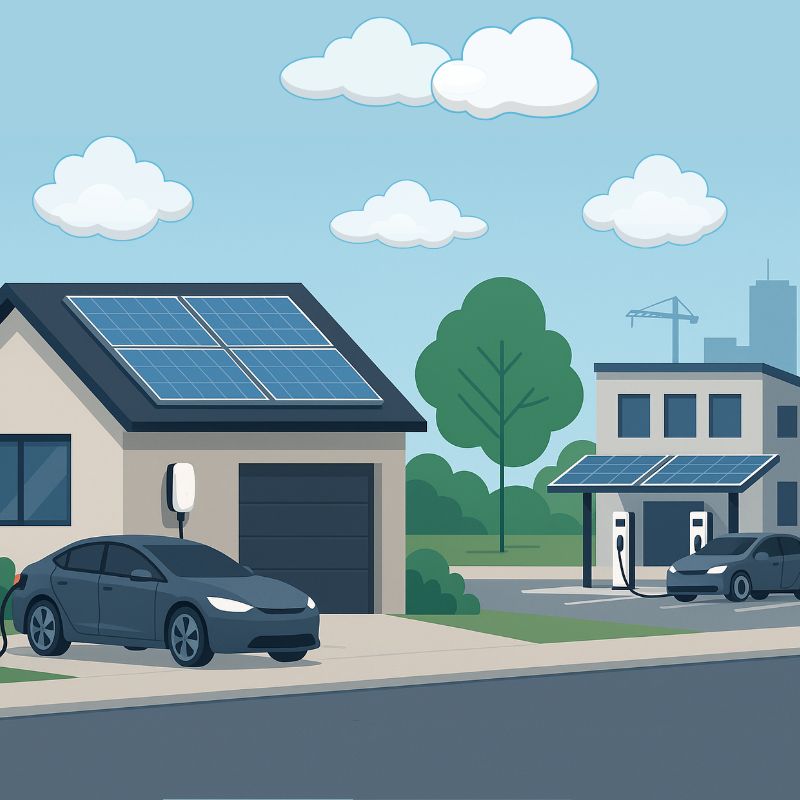
Another aspect of future-proofing is integrating with other technologies. If you have solar panels or plan to get them, an EV charger lets you use your solar energy to power your car (sun-powered commuting!). Home battery systems can also work in tandem with EV charging to optimize energy use. All these pieces, solar, battery storage, EV charging, are parts of the emerging clean energy home. Having one piece (the EV charger) installed sets you up to easily adopt others in the future if you choose, creating a resilient and efficient home. For businesses, showing that you’re plugged into these trends (maybe literally with solar canopies over your EV parking spots in the future) can enhance your brand and potentially even earn credits or recognition (some sustainability certifications and programs give points for EV infrastructure).
In short, installing an EV charger is not just a one-off tech upgrade; it’s a step toward future-proofing your property for the next 10-20 years of advancement in transportation. It sends a message that your home or business is ready for what’s coming. And in a rapidly changing world, that readiness is a valuable asset in itself.
Choosing a Qualified Columbia-Area Electrician
When it comes to electrical work, especially something as significant as adding a high-powered EV charger, one rule stands above all: always use a qualified, licensed electrician. The Midlands region has its share of handymen and DIY enthusiasts, but an EV charger install is not the time to skimp on professional expertise. The charger will be drawing a lot of power (30, 40, or 50 amps continuously for hours) and you want to ensure the wiring, breaker, and installation are absolutely safe and up to code.
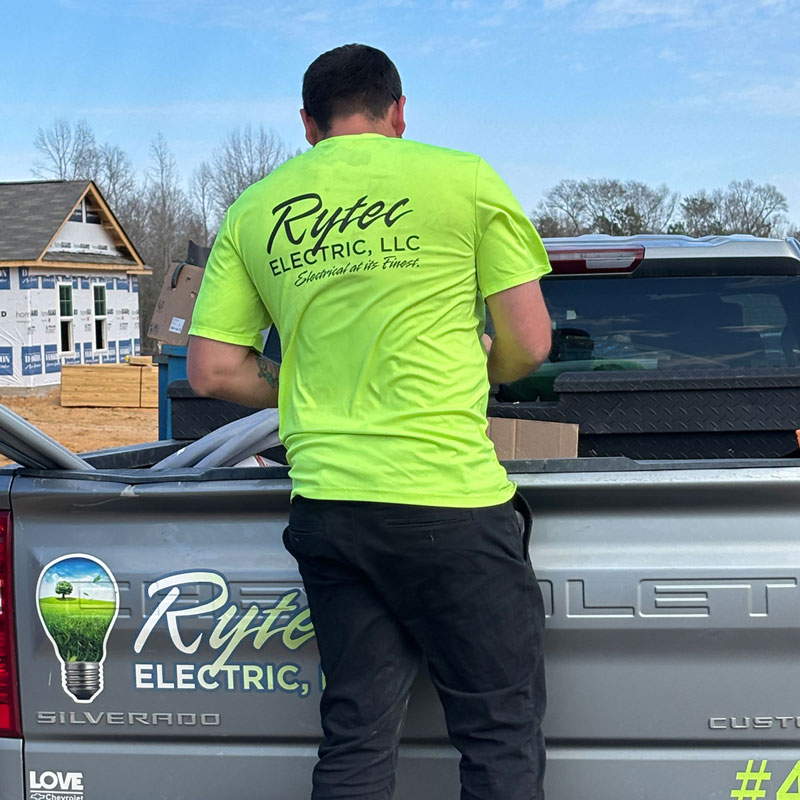
Rytec Electric, based here in the Columbia/Lexington area, is a prime example of the kind of professional service you should look for. We pride ourselves on being licensed Master Electricians with years of experience in residential and commercial electrical projects, including EV charging station installations. When you hire a company like Rytec Electric, you’re getting technicians who understand the local building codes, permit process, and utility requirements specific to South Carolina. We’ve been serving the Midlands for over two decades, so we know the quirks of older homes in Columbia (like those historic districts with antique wiring), as well as the needs of new construction in expanding communities around Richland and Lexington counties.
Quality and reliability matter to us. A proper EV charger installation isn’t just about hooking up a couple of wires; it’s about evaluating your entire electrical system’s ability to handle the extra load and doing the job with minimal disruption to your property. Our team will treat your home or business with care, we often hear from customers that we treat their home like our own, and that’s exactly our philosophy. That means neat, tidy work, respecting your time and space, and ensuring everything is cleaned up and functioning perfectly before we consider the job done.
Another advantage of choosing a local expert like Rytec Electric is that we can offer guidance beyond just the installation. Not sure what charger to buy? We can recommend models that we’ve seen great success with in our climate and usage conditions. Wondering about the best location or concerned about your old electrical panel? We’ll give honest advice and options, whether it’s a minor panel tweak or a major upgrade, so you can make an informed decision. And of course, safety is our top priority, we won’t take shortcuts or overlook issues just to get the job done fast. Every connection will be torque-tight, every wire gauge correctly chosen, and every circuit properly tested.
In Columbia’s summer thunderstorms and occasional ice storms, electrical reliability is crucial. We build installations that last and hold up to the environment. Plus, if you ever have questions or need support down the line, we’re right here in town, you’re not calling a far-off manufacturer or a random electrician who won’t return your call. You have a partner in Rytec Electric for the long haul. We stand by our work, and your satisfaction is our reputation.
With the right electrician, the process will be smooth, safe, and likely a lot quicker than you expect, we’ve had many installs completed in just a few hours once any prep work is done. The result is that you can plug in confidently, knowing your system is solid.
In summary, choosing the right electrician is as important as choosing the right charger. In the Columbia area, Rytec Electric is ready to be that trusted expert for you. We bring the skill, experience, and local trustworthiness to make your EV charger installation a success from start to finish.
Ready to Plug In?
Installing an EV charger at your home or small business in Columbia, SC isn’t just about keeping up with a trend, it’s about reaping very real benefits today and in the years ahead. Homeowners who invest in a charger gain unparalleled convenience (no more gas stations or waiting on public chargers), enjoy potential savings and property value gains, and set themselves up for the all-electric future that’s unfolding. Small businesses that provide EV charging position themselves as modern, customer-friendly, and environmentally conscious, which can drive customer loyalty and even boost the worth of their property. In a nutshell, while you might ask “Do I really need this?”, the answer is increasingly “Yes, and you’ll be glad you did.” It’s an upgrade that pays off in multiple ways.
As a Midlands community member, you’ve seen how our area is growing and changing. Embracing EV technology is part of that positive growth. Whether you’re a homeowner in Forest Acres or a shop owner in Lexington, an EV charger could soon go from a nice-to-have to a must-have. And when installed properly, it’s an asset that keeps on giving, from daily convenience to long-term financial returns.

If you’re thinking about an EV charger, let’s take the next step. Contact Rytec Electric for an on-site assessment or quote. We’re happy to come out, look at your setup, discuss your needs, and give you an honest, straightforward estimate. No pressure, just solid information to help you make the best decision. As a local Columbia-area electrical contractor with deep roots in the community, we’re here to answer your questions and provide top-notch service. Whether you have one EV or a whole fleet, whether you need a home garage install or a series of commercial parking lot stations, Rytec Electric has the expertise to get it done right the first time.
Ready to charge into the future? Give us a call today to schedule a consultation. We’ll make sure your property is EV-ready and your experience is hassle-free. With Rytec Electric on your side, you can plug in with confidence, knowing you’ve got the Midlands’ most trusted electrician handling your EV charging needs. Let’s work together to power your property into the electric era!