
GFCI vs AFCI Outlets:
The Key to Home Electrical Safety
Homeowners and new homebuyers often hear about GFCI and AFCI outlets when discussing electrical safety. But what do these acronyms mean, and why are they so critical? In short, GFCI (Ground Fault Circuit Interrupter) devices protect people from electric shock, especially in wet areas, while AFCI (Arc Fault Circuit Interrupter) devices protect against electrical fires caused by arcing. Both are required by modern electrical codes in various parts of your home for safety.
As a homeowner in Lexington, SC, understanding these life-saving outlets will help you keep your family safe and ensure your home meets current electrical standards.
In this article, we’ll explain what GFCIs and AFCIs are, how they work, where they’re required, and how to make sure your Lexington home is protected.
GFCI Outlets: Preventing Electric Shocks in Wet Areas
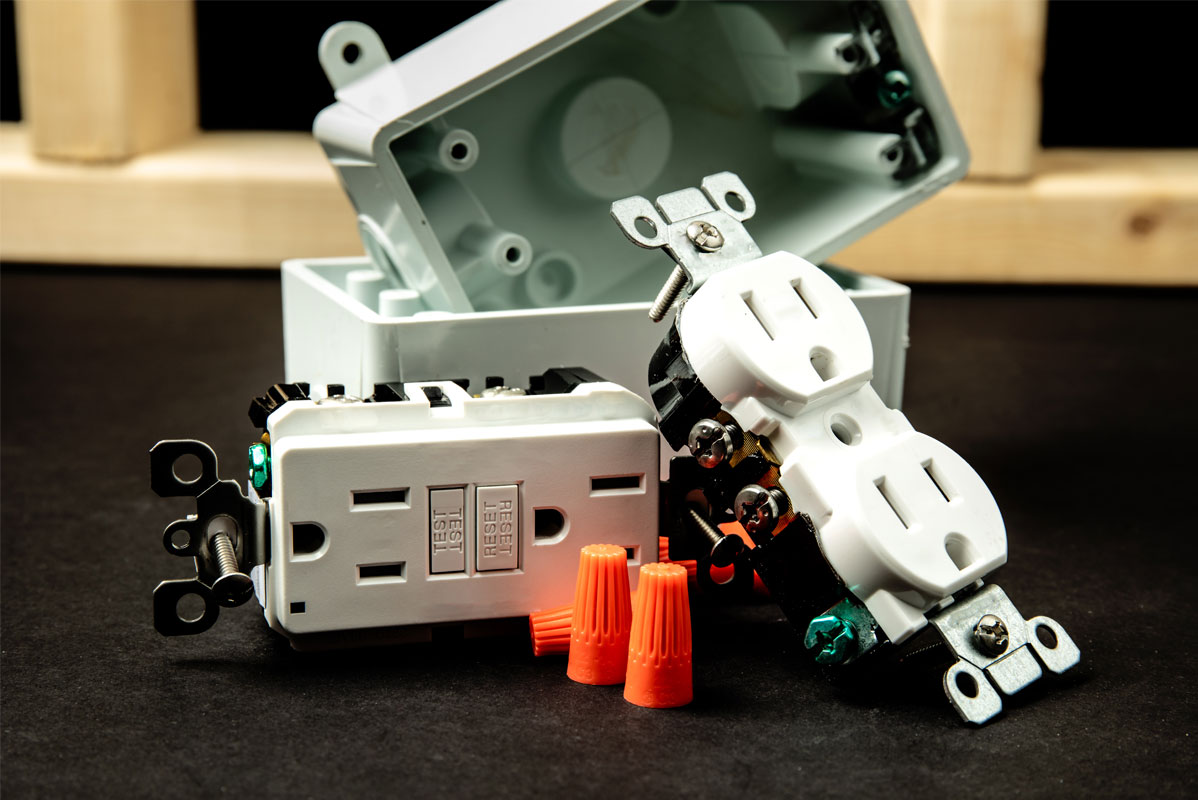
Figure: A typical GFCI outlet with “TEST” and “RESET” buttons. GFCI outlets are designed to prevent deadly electric shocks by cutting power the instant they detect a problem. “Ground-fault” shocks can occur when electricity strays outside its intended path – for example, if an appliance drops into water or if a person contacts a live wire and a grounded surface. A GFCI continuously monitors the current flowing in a circuit and will trip (shut off power) in as fast as 1/40 of a second if it senses even a tiny imbalance (around 4–6 milliamps) between the hot and neutral conductors. This typically means current is leaking to ground (possibly through a person), so the GFCI cuts the power before a shock can cause injury.
How GFCIs Work: Inside each GFCI device is a sensitive sensor that compares the outgoing and returning electrical current. If any current is “missing” (diverted through an unintended path), the GFCI springs into action and breaks the circuit almost instantly. By stopping the flow of electricity fast enough, GFCIs protect you from severe shocks or electrocution. This is why you’ll find TEST and RESET buttons on GFCI outlets – they allow you to check that the safety mechanism is functioning and to reset it after a trip.
Where GFCI Protection Is Required: Because of their importance, the National Electrical Code (NEC) requires GFCI protection in locations of the home most prone to water and moisture. These include bathrooms, kitchens, laundry rooms, garages, unfinished basements, and outdoor outlets – essentially, anywhere you might be using electrical devices near water or bare ground. For instance, kitchen countertop outlets and bathroom outlets must be GFCI-protected, as well as outlets in crawl spaces, near pools or spas, and in outdoor receptacles for holiday lights or tools. (Recent code updates have even extended GFCI requirements to all outlets in the kitchen, not just near the sink – more on that later.) If you look around your home and see outlets with the test/reset buttons, those are GFCIs doing their job. If an outlet in a required area isn’t GFCI, that’s a sign your home may be out of code compliance and in need of an upgrade for safety.
Why GFCIs Are Life Savers: Simply put, GFCIs save lives by preventing electrocutions. These devices have been in homes since the 1970s, and in that time they’ve reduced household electrocutions by about 50%, according to the U.S. Consumer Product Safety Commission. The introduction of GFCIs into homes (starting with bathrooms and outdoor circuits decades ago) has literally cut the rate of fatal shocks in half. For example, if a hair dryer falls into a sink full of water, a properly working GFCI will trip and shut off the power before you can be shocked. In the past, such accidents often led to tragedy; today, a GFCI can turn a potential electrocution into a non-event. It’s no wonder GFCIs are considered an essential home safety device. (In fact, not only are they required by code in certain areas, but many home insurance and inspection reports will flag the absence of GFCIs as a hazard that should be corrected.)
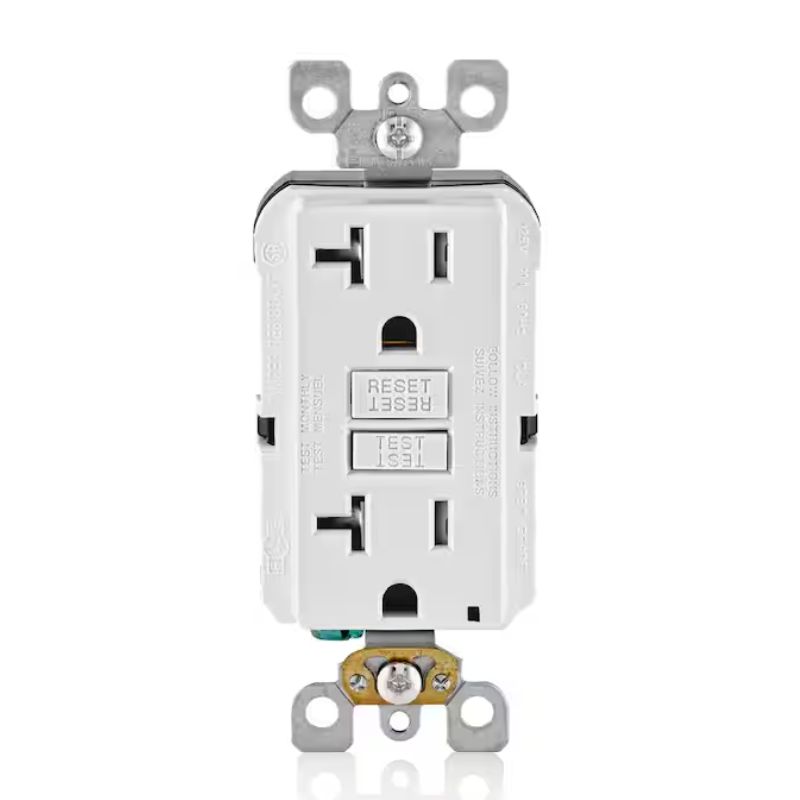
Image source: Home Depot
AFCI Outlets: Preventing Electrical Fires from Arcing
While GFCIs protect people from shock, AFCIs (Arc Fault Circuit Interrupters) are designed to protect your home from electrical fires. An “arc fault” is an unintended electric arc – essentially a tiny spark or series of sparks – somewhere in a circuit. Arcing might occur due to a damaged wire, a loose connection, a pinched extension cord, or deteriorated insulation. These arcs generate intense heat that can ignite surrounding materials (like wood framing or insulation inside your walls) without ever drawing enough current to trip a regular breaker. That’s where AFCIs come in: they can detect the unique electrical signature of an arc and immediately shut off the circuit before the sparking can cause a fire.
How AFCIs Work: An AFCI device (typically an AFCI circuit breaker in your electrical panel, or sometimes a special AFCI outlet) continuously “listens” for the electrical patterns that indicate arcing. Normal appliances and switches have smooth current waveforms, whereas an arc produces a jagged, sporadic current signature. When the AFCI’s electronics sense this telltale arc waveform, it quickly cuts power to the circuit. This stops the arc, hopefully before any fire starts. Think of an AFCI as a smoke detector for your wiring – it detects a problem and responds before flames appear. According to safety data, arc faults are a leading cause of home fires. Each year in the United States, more than 28,000 home fires are started by arc faults, resulting in hundreds of deaths and injuries and over $700 million in property damage. AFCIs were developed to tackle this very problem by interrupting arcs at the source.
Where AFCI Protection Is Required: Electrical codes began requiring AFCI protection in the early 2000s, initially just in bedrooms (where many electrical fires start, often from cords or behind outlets). Over successive code updates, the requirement has expanded to include almost all habitable rooms and areas in a home. Today, the NEC mandates AFCI protection for virtually all 120-volt, 15 or 20-amp circuits feeding living spaces such as bedrooms, family rooms, dining rooms, living rooms, dens, sunrooms, hallways, and closets – basically everywhere except bathrooms, garages, and outdoor circuits. (Those excluded areas typically require GFCI protection instead due to the shock hazard, but not AFCI.) So, in a modern code-compliant home, your bedroom outlets, lighting circuits, and most other room outlets will be on AFCI breakers. For example, the breaker controlling your bedroom or living room will be an AFCI breaker that trips if it detects any dangerous arcing. This requirement greatly reduces the risk of an electrical fire in those areas while you’re asleep or away. Note: AFCI protection can be provided by specialized breakers in the main panel or by the first outlet on a circuit being an AFCI receptacle. In new construction, it’s common to install combination-type AFCI breakers that cover the whole circuit. In retrofit situations, an electrician might install an AFCI outlet at the start of a circuit if adding panel breakers is difficult. Either way, the goal is to have the wiring and all devices in those rooms guarded against unseen arcing faults.
AFCIs in Action – A Real Difference: To appreciate why AFCIs matter, consider a scenario: a loose wire connection behind an outlet in your den starts sparking intermittently as devices are plugged in. The tiny arcs don’t draw enough current to trip a regular breaker, but over time they char the outlet and nearby wood. This is a hidden fire waiting to ignite.
An AFCI, however, would sense the arc early on and shut off the power, likely saving your wall (and home) from catching fire. The importance is clear when you consider statistics – arcing faults cause roughly one-third of all home electrical fires. AFCIs directly address this by cutting off the arc’s source. Many experts, including the Electrical Safety Foundation International, urge homeowners (especially those with older wiring) to install AFCI protection as an essential electrical safety upgrade.
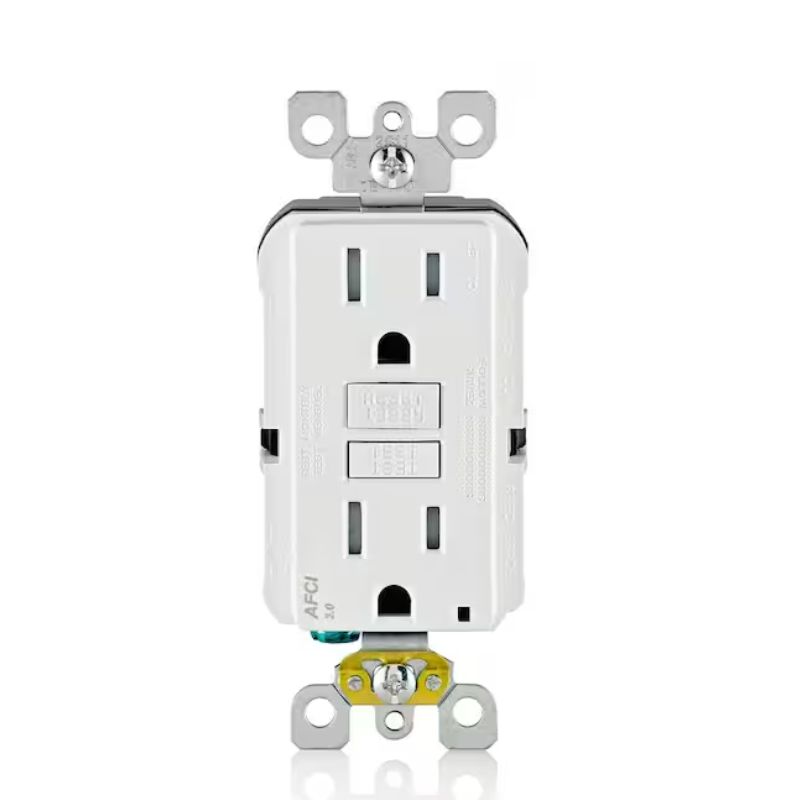
Image source: Home Depot
GFCI vs. AFCI: What’s the Difference?
It’s easy to mix up GFCIs and AFCIs since both are safety devices that “trip” to cut power, but they serve different purposes and detect different issues. Here’s a simple comparison:
GFCI (Ground Fault Circuit Interrupter):
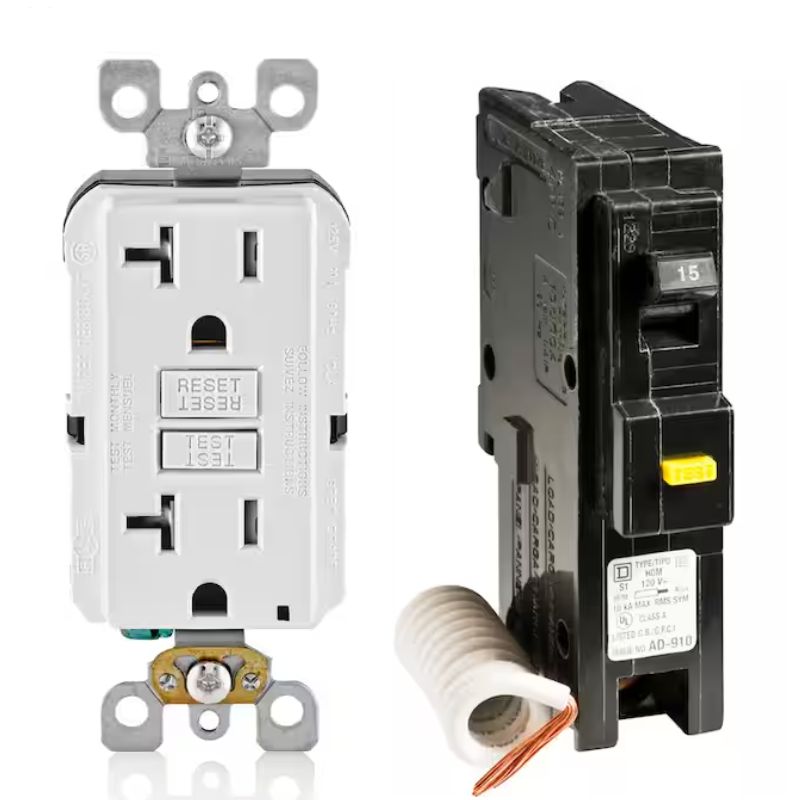
Think water and shock prevention. GFCIs detect when electrical current is straying outside the normal path (like into water or through a person) and shut off power to prevent electrocution. They react in milliseconds to save you from severe shock. GFCIs are typically installed in outlets (with test/reset buttons) or as breakers for circuits in bathrooms, kitchens, garages, outdoors, and other wet or grounded locations.
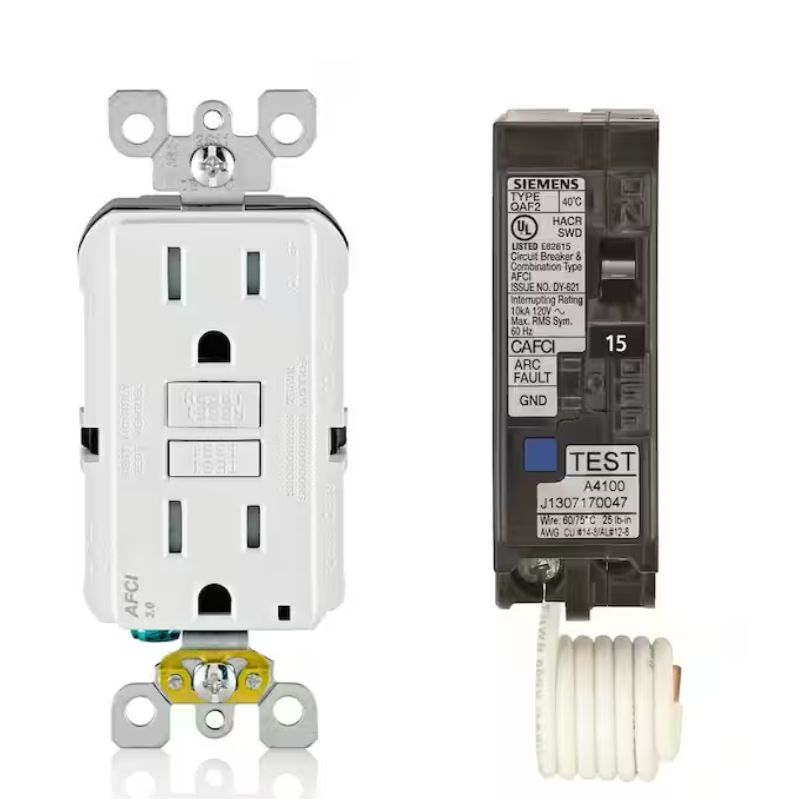
AFCI (Arc Fault Circuit Interrupter):
Think fire prevention. AFCIs detect dangerous arcing (sparks) in a circuit – for instance, from a frayed cord or loose wire connection – and shut off power to prevent the wiring from igniting a fire. They are usually installed as specialized circuit breakers in your electrical panel (often with a test button), protecting entire branch circuits in living areas like bedrooms, living rooms, etc..
In summary, GFCIs protect people (from shock), while AFCIs protect buildings (from fire). They each sense different fault conditions, so one cannot substitute for the other. In fact, many areas of the home (such as kitchens, laundry rooms, and bedrooms) now require both types of protection – one for shock and one for fire. How do you achieve that? This is where dual-function devices come in.
Dual-Function GFCI/AFCI Options: Modern electrical equipment offers combination protection in one package. For example, there are dual-function circuit breakers that provide both AFCI and GFCI protection simultaneously. Installing one of these in your panel means that circuit is safeguarded against both ground faults and arc faults. This is very handy (and often required) for circuits like kitchen receptacles, which per code must be AFCI-protected (kitchen area) and GFCI-protected (due to presence of water). Rather than using two separate devices, a dual-function breaker covers both needs. Likewise, some manufacturers offer outlet receptacles that combine AFCI + GFCI in one unit for retrofit situations. Dual-function breakers are “two state-of-the-art technologies packaged in one device,” protecting against both shock and fire hazards. Using these doesn’t diminish the protection – they are designed to trip just as effectively for ground faults or arc faults as the individual devices would. In short, if a circuit in your home needs both types of protection, your electrician will either install a dual-function breaker or a combination of an AFCI breaker and GFCI outlets downstream to ensure complete coverage.
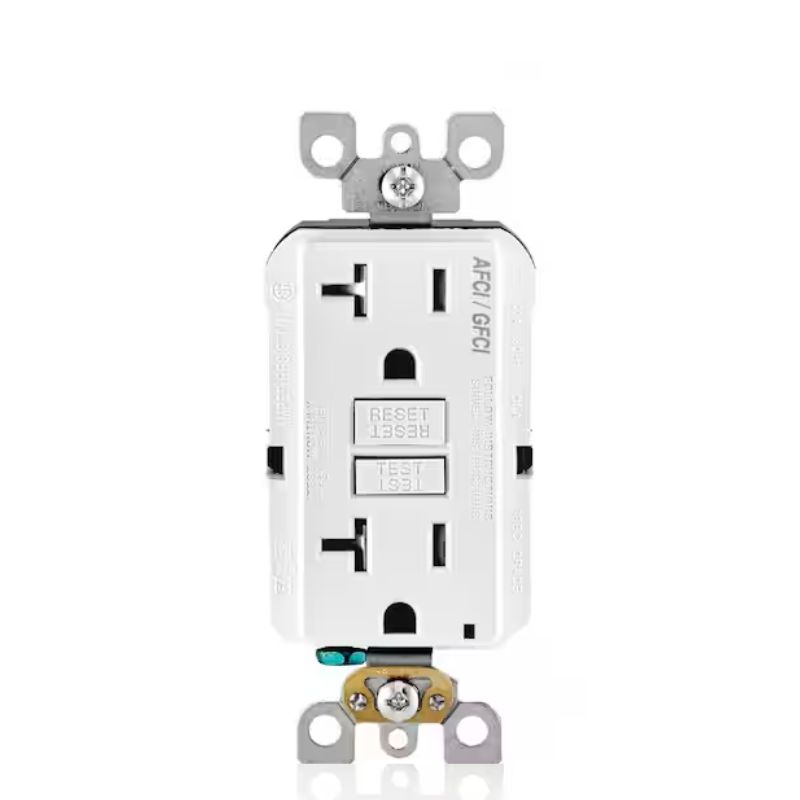
Image source: Home Depot
2023 NEC Code Updates:
New Requirements for GFCIs and AFCIs
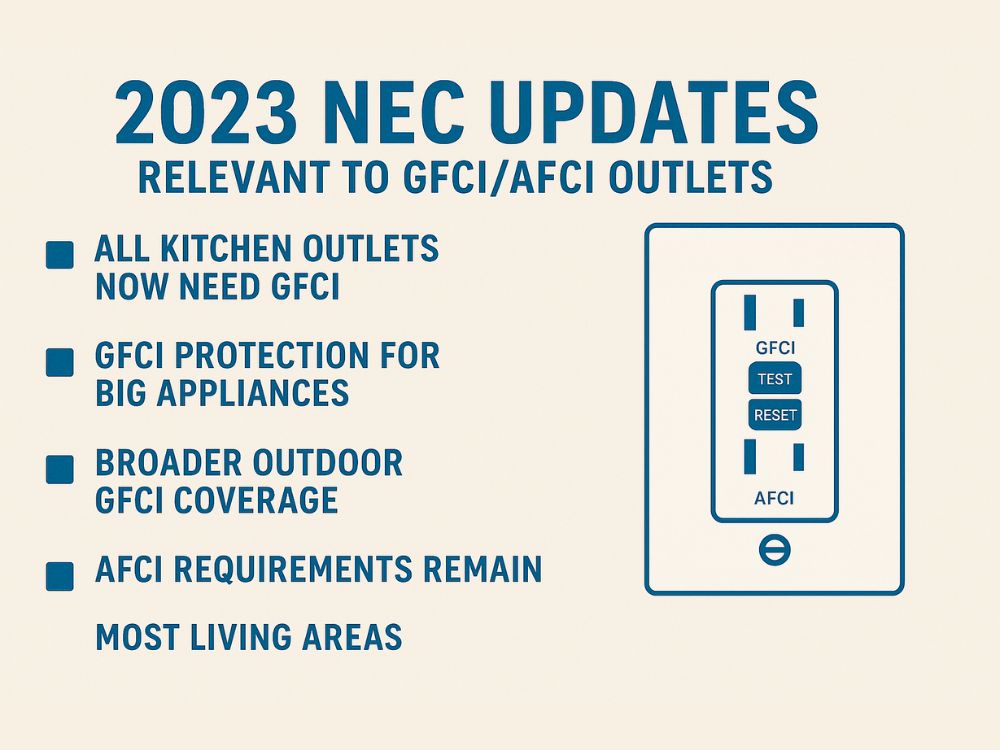
Electrical safety codes are updated every three years, and the 2023 National Electrical Code (NEC) introduced some important new rules regarding GFCI and AFCI protection. Even if you’re not an electrician, it’s good to know the direction codes are moving, especially if you’re renovating or buying a new home in 2024 or beyond. Here are some notable 2023 NEC updates relevant to GFCI/AFCI outlets:
- All Kitchen Outlets Now Need GFCI: In previous code editions, only countertop receptacles in kitchens required GFCI protection. The 2023 NEC expanded this to all receptacles in a kitchen. That means even the fridge, microwave, and fixed appliances like a dishwasher or garbage disposal must be on GFCI-protected circuits now. In practical terms, any outlet where you could plug in an appliance in the kitchen must be GFCI protected. This change recognizes that shocks can happen anywhere in a kitchen (not just by the sink). So if you have an older home, your refrigerator outlet likely isn’t GFCI – but in new construction it will be, and this is a smart safety upgrade to consider.
- GFCI Protection for Big Appliances: The new code also added requirements to protect several 240-volt appliances that were not previously covered. Branch circuits or outlets for **electric ranges (stoves), wall-mounted ovens, countertop cooking units, and even clothes dryers now must be GFCI-protected. This is a significant expansion – for example, an electric dryer in a laundry room and an electric stove in the kitchen are both typically 240V circuits that historically didn’t require GFCI. But analysis of incident data (and perhaps the fact that laundry areas are prone to wet floors) led the NEC to include them. So don’t be surprised if your electrician suggests installing a hefty GFCI breaker for your range or dryer during an upgrade – it’s now part of the safety code.
- Broader Outdoor GFCI Coverage: Outdoor outlets have long needed GFCI, but the 2023 NEC made the rules even more encompassing. All outdoor outlets up to 50 amps must be GFCI protected. This covers things like RV hookups or heavy-duty outlets on the exterior of a house. Additionally, any receptacles within 20 feet of a swimming pool must be GFCI (which was already the case), and new specific rules clarify GFCI protection for pool-related equipment and lighting within certain distances. The bottom line: whether it’s a Christmas light plug on your porch or a pool pump outlet in the yard, it needs ground-fault protection for safety. If you have an older pool or outdoor setup without GFCI, it’s definitely time to update for code compliance and peace of mind.
- AFCI Requirements Remain (Covering Most Living Areas): The 2023 code didn’t dramatically change the AFCI requirements, since those were already quite extensive from previous cycles. It continues to mandate AFCI protection for virtually all living-area circuits in dwellings (e.g. bedrooms, living rooms, dining rooms, hallways, etc.) and requires the AFCI device be readily accessible. Notably, AFCI is still not required in bathrooms, garages, or outdoors in dwellings, but is required in all the other rooms listed earlier. One subtle update in recent code cycles is that AFCI protection is now also required in laundry areas and kitchens (which were not in the earliest AFCI rules but were added as those areas were found to benefit from fire prevention). So basically, if you’re remodeling any room in your home that isn’t a bathroom or garage, expect to add AFCI protection if not already present. Also, the NEC now emphasizes that when you extend or modify an existing circuit in those areas, you must add AFCI protection to that circuit as well. This means if you, say, add an outlet in your bedroom or run power to a new den, you can’t just tap into an old circuit without upgrading it to AFCI standards.
Staying on top of these code updates is one reason it’s valuable to consult a professional electrician for any renovations. They’ll ensure your home meets the latest safety requirements, which in 2023 are stricter than ever regarding GFCIs and AFCIs. South Carolina generally adopts the NEC (usually with a lag of a year or so), which means these 2023 changes are or soon will be enforceable in Lexington County and surrounding areas. Even if enforcement isn’t immediate, the safety benefits are real, so it’s wise to implement them in your home.
Older Homes May Not Be Up to Code –
Upgrade for Safety
Many homeowners in Lexington, SC live in houses built decades ago, which may not have all the modern safety features we’ve discussed. Older homes are often not up to current electrical code, especially regarding GFCI and AFCI protections. For instance, if your home was built before the mid-1970s, it likely had no GFCI outlets at all originally (since GFCIs weren’t widely required until the 1971–1975 code updates). Homes from the 1980s might have GFCIs only in a couple of areas (like one GFCI in the bathroom or garage), but not everywhere they should be by today’s standards. Similarly, houses built before the early 2000s will usually lack AFCI protection, because AFCIs only became a code requirement around 1999/2002 for bedrooms, and even later for other rooms. So a house from 1995 likely has zero AFCIs in its panel, and a house from 2005 might have them only on bedroom circuits, but not for the family room, etc.
What does this mean for homeowners? Electrical safety technology has come a long way, and just because an older home wasn’t required to have these devices when it was built doesn’t mean it’s as safe as it could be today. Codes evolve in response to hazards – the code changes we mentioned (like requiring GFCIs on kitchen fridges or AFCIs in living rooms) were driven by real incidents and data showing that these upgrades save lives and property. If your home is older, it’s highly recommended to have an electrician inspect your electrical system and identify where GFCI or AFCI protection can be added or upgraded. In many cases, retrofitting GFCIs is straightforward – for example, replacing a standard outlet by the bathroom or kitchen sink with a GFCI outlet, or installing a GFCI breaker for an old circuit. AFCIs can be added by replacing ordinary breakers with AFCI breakers. A licensed electrician can often swap in these safety devices in a few hours, immediately bringing your home much closer to current safety standards.
Safety Benefits for Older Homes: The risk of shock or fire is generally higher in older wiring systems. Wires may have deteriorated insulation, there could be unknown DIY modifications by previous owners, or simply the absence of modern safeguards. For example, an older home may have two-prong outlets with no ground – a GFCI can be installed on such circuits to provide shock protection even without a ground wire (an allowed fix in the NEC). Or consider old aluminum wiring from the 1960s-70s: it’s prone to loose connections and arcing; installing AFCI breakers on those circuits can provide an extra layer of protection against an electrical fire. Statistics strongly support upgrading – one study found that houses with up-to-date GFCI protection had far fewer electrocutions, and those with AFCIs had significantly fewer fire incidents.
It’s important to note that while building codes typically don’t force you to retrofit older homes to new code until you do renovation work, nothing stops you from voluntarily improving safety. Organizations like the NFPA and ESFI urge homeowners to bring older homes closer to current code for safety. In fact, ESFI explicitly recommends asking a qualified electrician if your home would benefit from AFCI upgrades, “especially during inspections of older homes or upgrades to electrical systems,” noting that these advanced devices recognize dangerous conditions standard breakers miss. In short: if your home is older or you’re not sure if it has proper GFCI/AFCI protection, schedule an electrical safety inspection. It’s an inexpensive way to identify hazards and potentially prevent a disaster.
Testing Your Outlets and Breakers for Safety
Installing GFCIs and AFCIs is not a “set it and forget it” task – these devices should be tested regularly to ensure they’re functioning properly. The good news is that both GFCI outlets and AFCI breakers have built-in test features that make it easy for homeowners to check them. Here’s how you can verify that your safety outlets are working:
How to Test GFCI Outlets: The NEC and product manufacturers recommend testing your GFCI outlets about once a month (or at least a few times a year). It’s a quick process:
- Plug in a lamp or night light into the GFCI outlet (and make sure the light is turned on). Initially press the RESET button on the outlet to ensure it’s reset and powering the device. The light should be on.
- Press the TEST button on the GFCI outlet. This should immediately trip the outlet and cut power – you will know because the lamp or night light will shut off. Observe that the RESET button pops out; on many GFCIs, the reset button will protrude when tripped. This indicates the GFCI sensed a problem (your test) and correctly disconnected the circuit.
- Finally, press the RESET button again. Power should be restored to the outlet (the lamp comes back on). If everything happened as described, your GFCI passed the test. If the lamp never went out when you pressed TEST, or if the outlet did not reset properly, the GFCI may be defective – do not ignore this! A non-functional GFCI is a serious hazard. In that case, contact a licensed electrician to replace the outlet. GFCIs do wear out over time, so if an older one isn’t tripping as it should, swap it out. Many newer GFCI outlets have a small indicator light to show their status, and some will even self-test periodically and flash or beep if they fail – but you should still manually test them to be sure.
How to Test AFCI Breakers: AFCI circuit breakers (found in your electrical panel) also have a test function, usually a little pushbutton on the breaker itself, often labeled “Test” or sometimes “Arc Fault.” The recommended interval for testing AFCIs is also about once a month. To test an AFCI breaker:
- First, inform anyone in your home that you’re about to cut power briefly (so you don’t, say, reboot someone’s computer without warning). Identify a known AFCI breaker in your main panel – they are often labeled, or have a different color/button than regular breakers.
- With the breaker in the ON position, press the TEST button on the AFCI breaker. If functioning, the breaker should trip immediately, clicking to the OFF (or tripped center) position. This will cut power to the circuit it controls.
- Reset the breaker by switching it fully off and then on (or on some models, just flipping it back to ON if it has an external test button). Power should be restored to that circuit.
- If the breaker did not trip when you pressed the test button, or it won’t reset, then it may be faulty and you should have an electrician look at it. Do not ignore an AFCI that doesn’t trip via test – if it can’t trip when tested, it likely won’t trip when there’s an actual arc-fault, defeating its purpose. Also, note that some older AFCI breakers (from early 2000s) were subject to recalls due to performance issues; your electrician can identify and replace those with newer units if needed.
Tip: It’s a good idea to map out which circuits in your home are protected by GFCIs or AFCIs. For GFCIs, you might have them both in the panel and as outlets. For example, a bathroom might be protected by a GFCI outlet in the bathroom itself or by one GFCI in another bathroom that’s wired to also protect additional outlets downstream. If some of your regular-looking outlets suddenly lost power, check if a GFCI elsewhere tripped (this is a common occurrence – one GFCI outlet trip can shut off multiple outlets in different rooms). Labeling your GFCIs and finding “feed-through” protection zones can save you a lot of mystery if something trips. For AFCIs, your electrical panel directory should indicate which breakers are AFCI (often they have an “A” or are labeled as such). Ensure those circuits are indeed covering the required areas (bedrooms, etc.). If you’re not sure, an electrician can help identify them.
Lastly, never tape or hold down a tripped breaker, and never bypass a GFCI/AFCI because it’s “nuisance tripping.” If a device is frequently tripping, it’s a sign of a problem: either a genuine electrical fault or a device issue that needs attention. For instance, a GFCI that repeatedly trips might indicate an appliance with an insulation leak (a potential shock hazard), and an AFCI that trips often could point to a sparking connection somewhere. In either case, get it checked out – these devices are telling you something is wrong. It can be inconvenient, but their whole purpose is to warn you and prevent hazards.
When to Call a Licensed Electrician
Electrical work and safety devices like GFCIs and AFCIs should be taken seriously. While testing and even resetting these devices is something a homeowner can do, installation or replacement is best left to a licensed electrician. Here’s when to call a pro:
- Upgrading Outlets or Breakers: If your home needs additional GFCI or AFCI protection (as discussed for older homes or renovations), an electrician can properly install these. GFCI outlets involve wiring connections that must be correct (line vs. load terminals, etc.), and AFCI or dual-function breakers must be compatible with your panel. A licensed electrician will ensure the device is installed correctly and verify it protects the intended circuit. Improper installation can render the protection ineffective or create new hazards, so this is not a DIY area unless you have proper training. Remember, in South Carolina, significant electrical modifications typically require a permit and a qualified person to perform the work – for safety and code compliance.
- Frequent Tripping or Suspected Issues: If a GFCI outlet won’t reset or keeps tripping, or an AFCI breaker keeps tripping without obvious cause, you should call an electrician to troubleshoot the circuit. There may be an underlying problem (like a neutral-to-ground fault, water intrusion, or a wiring issue) causing the trips. These issues can be complex to diagnose. Don’t just keep resetting a breaker that trips repeatedly; find out why it’s tripping. Electricians have tools to trace ground faults or arc faults and can fix the root cause. Replace any GFCI outlet that doesn’t trip during testing – this is critical. Also, if your GFCI or AFCI devices are very old (over 10-15 years), consider having them inspected or replaced, as electronics can degrade over time.
- Electrical Inspection for Home Purchase or Remodel: If you’re buying a home in Lexington or planning a major renovation, have an electrician perform a code compliance and safety inspection. They will check if all required GFCI/AFCI protections are in place and functioning. It’s better to budget for adding a few safety upgrades than to suffer an avoidable accident. Many older homes in our area have been gradually updated; an inspection will reveal if any critical updates are still missing. As the saying goes, “an ounce of prevention is worth a pound of cure.” In electrical terms, a couple of hundred dollars for GFCI/AFCI upgrades is well worth preventing a house fire or a severe shock.
- Peace of Mind & Professional Advice: Sometimes you may just be unsure about your home’s electrical safety. Perhaps an outlet looks burned, or you don’t see any GFCIs where there should be one, or you’re worried about the old breaker panel’s condition. This is the perfect time to call a local Lexington, SC electrician for advice. At Rytec Electric, we often get questions from homeowners about whether their home is safe or “up to code.” We’re happy to evaluate and explain what can be improved. Never feel silly about asking for an electrical safety check – your family’s safety is paramount, and we’re here to help keep your home hazard-free.
Protecting Your Lexington Home – We’re Here to Help
Don’t wait for an accident to happen. If you’re unsure whether your kitchen, bathrooms, bedrooms, or other areas have the proper protection, give Rytec Electric a call to schedule a home electrical safety inspection or consultation. We will check your outlets and panel for the presence and proper operation of GFCIs and AFCIs, test the devices, and identify any missing protections. We’ll then provide recommendations to improve your home’s electrical safety – whether that’s adding a few GFCI outlets or replacing old breakers with new AFCI or dual-function breakers. Our licensed electricians will ensure any new installations are done neatly, correctly, and up to code. Your safety is our top priority, and even minor upgrades can significantly reduce the risk of electrical shocks or fires in your home.

In conclusion, GFCI and AFCI outlets are critical guardians in your home’s electrical system. They work silently in the background to protect you from shocks and prevent fires, but they need to be present and cared for to do their job. Take a moment to check your home: test your GFCIs, look for AFCI labels in your breaker panel, and note any missing protections. And if you need assistance or upgrades, remember that Rytec Electric is here for all Lexington-area residents. Keep your home safe by keeping it up to date – a little attention to these special outlets can go a long way toward preserving your property and your family’s well-being for years to come.