
The History of Home Electrical
System Safety
Plugging in an electrical device is an everyday experience that most of us don’t even think twice about. We aren’t worried that we’ll receive a nasty shock or that an overloaded circuit will start smoking and possibly cause a fire. As long as we have our electrical work performed by qualified electricians and get routine electrical inspections, we can reliably expect our electrical systems to provide 24/7 safety.
But our relationship with electricity hasn’t always been so blasé – and the safety we enjoy today is the product of nearly 150 years of continuous technological improvements and updates to our nation’s electrical code that make sure our homes are equipped with them.
Electrify First – Safety Later
The first person to be killed by an electrical shock (outside of those unfortunate enough to be struck by lightning) was a carpenter in Lyon, France, who accidentally came in contact with a 250 volt electrical line powered by a Siemens dynamo.
As electricity became more common in businesses and homes, the rate of injury and death skyrocketed. By 1888 there were 40 to 50 annual deaths from electricity in the United States, a number which would quadruple by 1913. These numbers might sound low – but with a very small number of homes and businesses being electrified – the rate was actually quite high. While electricity was bringing light into the world, in the early days safety was poorly understood and mistakes could often prove fatal.
Recognizing that something needed to be done about the dangers posed by electricity, no fewer than five different electrical safety codes were created by 1895. However, the wide variety of codes meant that there was no agreed upon standard – and so by 1897 many of the codes were consolidated into the National Electric Code (NEC). The NEC has gone through many changes, but it is still the industry standard in the United States.
Despite the adoption of more uniform codes, the field of electrical safety was still poorly understood and lots of dangerous practices weren’t just commonplace – they were recommended. For example, the 1936 American Electricians’ Handbook offered the following advice to electricians:
“Electricians often test circuits for the presence of voltage by touching the conductors with the fingers. This method is safe where the voltage does not exceed 250 and is often very convenient.”

Please dear reader, never test for voltage by using your fingers to feel for current! If there is a current, you will receive a shock. In the best case scenario this will hurt a lot, but you may also be severely injured or worse.
Welcome Additions: Circuit Breakers and Ground Wires
The earliest safety features found in homes was the humble fuse box. Just like modern cars have fuses, houses used to have single-use fuses (typically 120 volt / 30 amp) which offered some protection against overcurrent conditions. However, it wasn’t unheard of for people to replace burnt out fuses with higher rated fuses or even with a penny – completely bypassing any protection they offered!
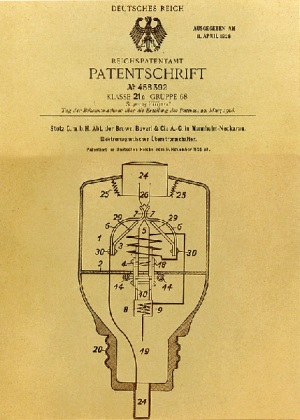
In 1924, the modern circuit breaker was invented, allowing for resettable electrical protection. Instead of needing to physically replace a fuse, homeowners could simply reset their circuit breaker and restore power. While it took decades for the older fuse boxes to be replaced, today circuit breakers are ubiquitous and offer reliable, resettable protection.
The next major change to home electrical systems was the addition of grounded circuits. Prior to the 1940s most homes used knob-and-tube wiring, and these systems did not include ground wires. This, in combination with the prevalence of metal-bodied appliances, meant that electrical shock was a daily risk.
In 1947 the NEC updated their residential outlet requirements, stating that “At least one receptacle outlet shall be installed for the connection of laundry appliances. This receptacle shall be 3-pole, of a type designed for grounding.” Over the next 20 years the NEC required more and more outlets to be grounded – starting with the higher risk locations like patios, basements, and garages, and then eventually encompassing every outlet in the home.
Modern Safety: GFCI and AFCI Protection
By the 1960s grounded outlets and circuit breakers had become commonplace – but there was still lots of room for improvement. One of the biggest risks was the dangerous (often fatal) results of electric devices coming into contact with water. Thankfully, the Ground Fault Circuit Interrupter, or GFCI, brought a technological solution to this serious problem. These devices work by detecting imbalances between the current leaving the positive (hot) side of the circuit, and the current returning via the neutral side. Within a fraction of a second the outlet cuts power, protecting against shocks.
The NEC first required GFCI outlets in bathrooms – using the reasoning that bathroom appliances and outlets are probably the most likely ones to be exposed to water. This change was rolled out in 1973, and since then there have been numerous revisions to the safety standard, requiring these life saving devices in more and more outlets in the home.
Check out our article all about GFCI outlets to learn more about how they function, where they are required, and how to make sure yours are working properly.
One of the most recent improvements in electrical safety was the invention of the Arc Fault Circuit Interrupter, or AFCI. Unlike GFCI, AFCI offers no protection against electrocution – but instead they are calibrated to detect conditions which may cause electrical fires.
First required by the NEC for bedroom circuits in 1999, these protective devices are now required in most areas of the home as electrical fires can happen anywhere!
Maintaining Your Home’s
Electrical Protection
Modern electrical systems are vastly safer than those found in homes during the early 1900s, and as a result injuries and fires caused by electricity are far less common than before. However, in order to ensure that your home is safe, it is essential to perform some routine checks.
We recommend that you test AFCI and GFCI outlets monthly to make sure they are still protecting your home. Additionally, homeowners should have their entire home’s electrical system regularly inspected by a licensed electrician. New homes should be inspected after ten years, and older homes should have their systems inspected every three to five years.
